
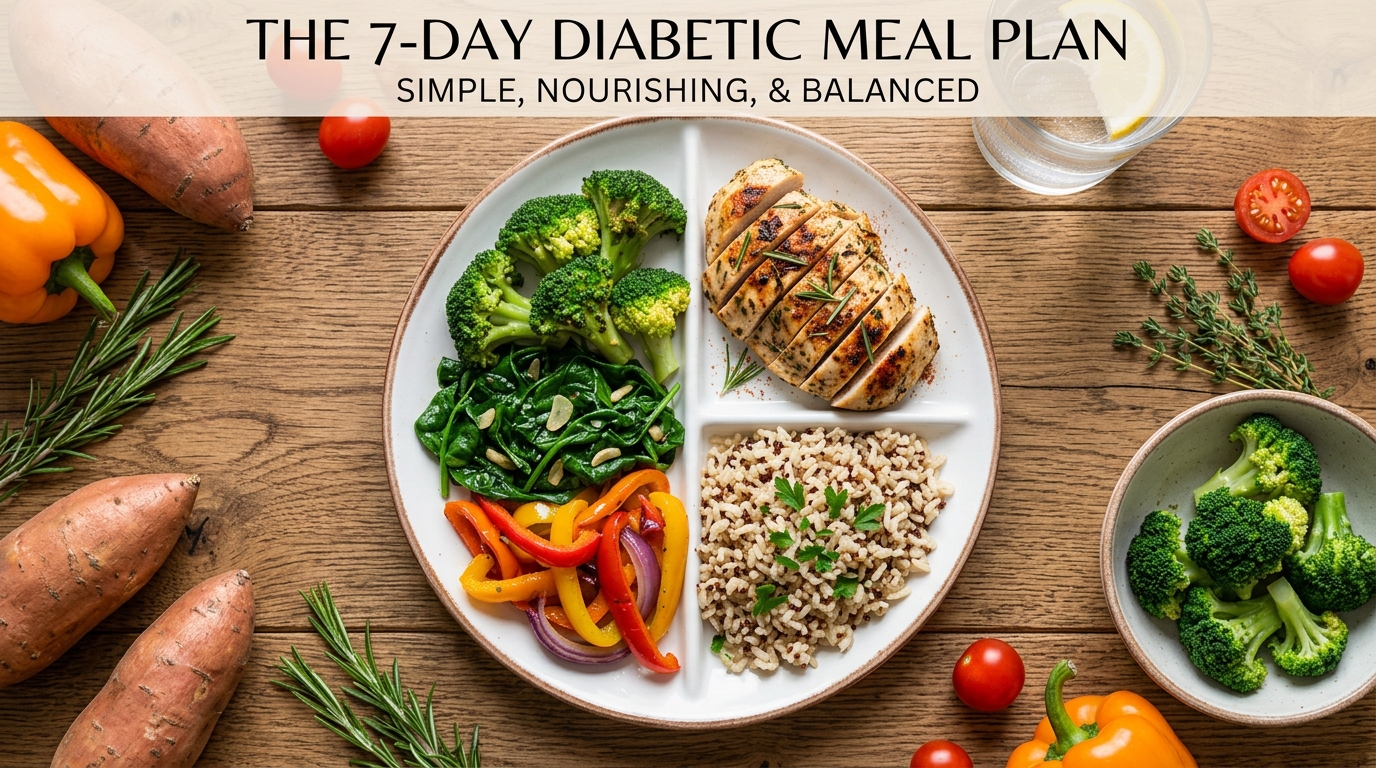
Finding a realistic 7-day diet plan for diabetic patients can feel completely overwhelming. Most online plans require you to buy expensive, exotic ingredients, spend hours meal prepping, or follow a rigid schedule that falls apart the moment life gets busy.
Worse yet, what happens when Wednesday rolls around and you don't have the exact ingredients your meal plan demands?
A successful free diabetes diet plan shouldn't feel like a chore, and it shouldn't force you to make extra trips to the supermarket. The secret to managing Type 2 diabetes, prediabetes, or gestational diabetes isn’t restriction—it is balance, portion control, and flexibility.
Below, you will find a simple, balanced, and completely free 7-day menu framework designed to keep your blood sugar steady, your energy high, and your carb goals on track.
The "Plate Principle" Behind a Healthy Diabetes Diet
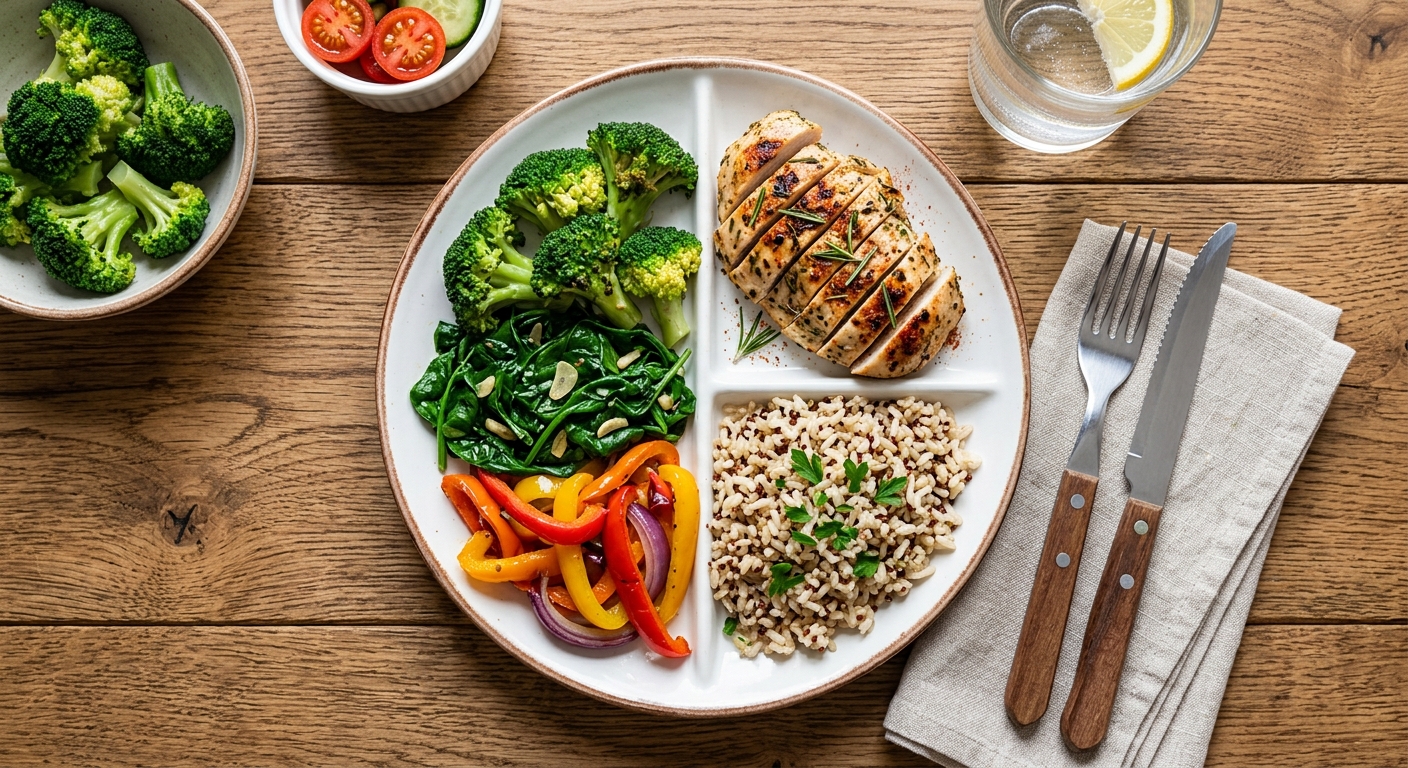
Before diving into the 7-day layout, it helps to understand how a balanced plate looks. Instead of obsessing over complex math, use the Diabetes Plate Method:
50% Non-Starchy Vegetables: Broccoli, spinach, salad greens, cauliflower, and peppers. These are packed with fibre and vitamins but won't spike your blood glucose levels.
25% Lean Protein: Chicken breast, turkey, eggs, tofu, fish, lentils, or chickpeas. Protein stabilizes blood sugar and keeps you feeling full.
25% Complex Carbohydrates: Brown rice, oats, sweet potatoes, wholewheat pasta, or quinoa. These release energy slowlycompared to refined white carbs.
The Ultimate Free 7-Day Diet Plan for Diabetic Patients
Note: This plan focuses on whole, unprocessed foods. For drinks, stick to water, unsweetened tea, or black coffee. Always tailor portion sizes to your personal daily carb target.
Day 1
Breakfast: Porridge made with rolled oats, water or semi-skimmed milk, topped with a handful of fresh blueberries and a sprinkle of chia seeds.
Lunch: A large mixed salad green bowl topped with grilled chicken breast, sliced cucumbers, tomatoes, and a drizzle of olive oil.
Dinner: Baked salmon fillet served alongside steamed broccoli and a small portion of quinoa.
Snack: A handful of unsalted almonds or walnuts.
Day 2
Breakfast: Two scrambled eggs with a handful of wilted spinach and one slice of toasted wholemeal bread.
Lunch: Leftover baked salmon and broccoli from Day 1, or a quick tuna salad made with low-fat Greek yogurt instead of mayonnaise.
Dinner: Stir-fried tofu or chicken with mixed vegetables (peppers, snap peas, mushrooms) cooked in rapeseed oil, served over a small bed of brown rice.
Snack: Sliced apple with a tablespoon of natural peanut butter.
Day 3
Breakfast: Unsweetened plain Greek yogurt layered with a few crushed walnuts and a dusting of cinnamon.
Lunch: A wholewheat wrap filled with sliced turkey breast, hummus, lettuce, and grated carrots.
Dinner: Lean beef or turkey chilli loaded with kidney beans and chopped tomatoes, served with a side salad.
Snack: Celery sticks filled with low-fat cottage cheese.
Day 4
Breakfast: Omelette made with two eggs, diced bell peppers, onions, and a sprinkle of reduced-fat cheddar cheese.
Lunch: Leftover lean turkey or vegetable chilli from Day 3.
Dinner: Grilled chicken breast with a roasted sweet potato wedge and a generous serving of roasted Brussels sprouts.
Snack: A small handful of pumpkin seeds.
Day 5
Breakfast: One slice of wholemeal toast topped with mashed avocado, a pinch of black pepper, and a poached egg.
Lunch: A Mediterranean lentil soup or bean salad with chopped cucumbers, tomatoes, parsley, and a light lemon-olive oil dressing.
Dinner: Baked cod or haddock fillet served with a large portion of cauliflower mash and steamed green beans.
Snack: A few fresh strawberries or raspberries.
Day 6
Breakfast: Rolled oats left overnight in low-fat milk or unsweetened almond milk, mixed with a spoonful of ground flaxseeds and a few berries.
Lunch: A pulled chicken or tofu wholewheat wrap with plenty of salad greens and sliced tomatoes.
Dinner: Wholewheat pasta tossed with grilled chicken, homemade tomato-basil sauce, and a massive side of roasted zucchini (courgettes).
Snack: A hard-boiled egg with a pinch of paprika.
Day 7
Breakfast: Scrambled tofu or eggs with grilled tomatoes and mushrooms (no added butter).
Lunch: A hearty vegetable and chickpea salad topped with a handful of feta cheese.
Dinner: Grilled lean steak or turkey steaks served with roasted asparagus and a small side of brown rice or quinoa.
Snack: A small pot of unsweetened plain Greek yogurt.
Why Rigid 7-Day Plans Usually Fail (And How to Fix It)
While following a static 7-day diet plan for diabetic patients can offer fantastic inspiration, real life rarely goes perfectly to plan. You might get stuck late at work, or find that the shop is completely out of fresh salmon, or realize your fridge contains random ingredients that do not match the recipe list.
When a meal plan is too rigid, it is easy to give up and order a takeaway instead. This causes frustrating blood sugar spikes and derails your health goals.
The solution isn't to follow a stricter plan. The solution is to use technology to adapt to what you already have.
Make Your Meal Plan Dynamic with GlucoForager
Instead of throwing away food or stressing over missing items, you can use the free GlucoForager app to instantly build meals around your life, your kitchen, and your diagnosis.
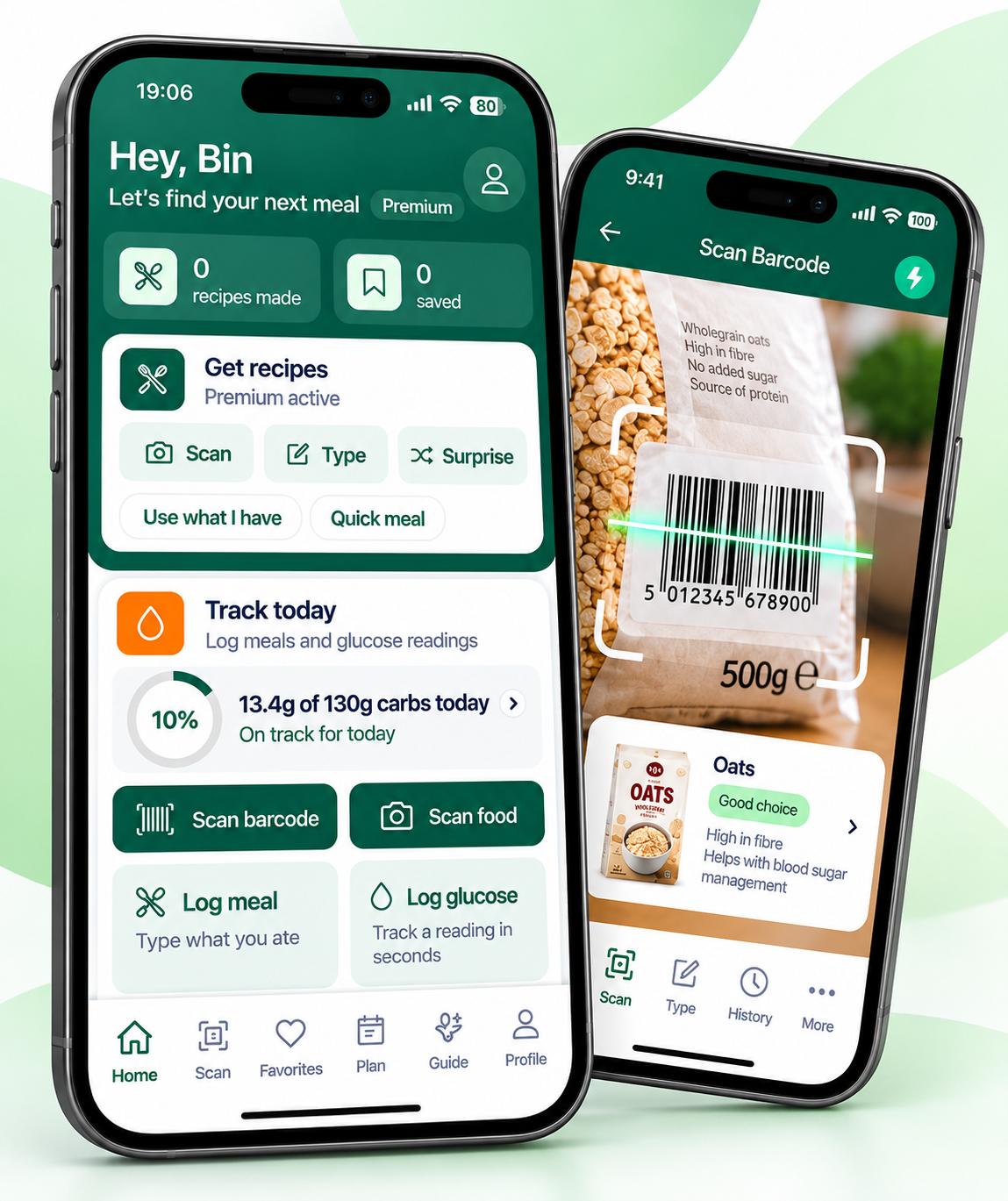
The Ingredient Scan Feature: Got a random zucchini, half a chicken breast, and some brown rice in the fridge? Simply snap a photo of your fridge or pantry, or type the ingredients directly into GlucoForager. The app instantly generates safe, tailored diabetes-friendly recipes without making you search through endless recipe blogs.
Personalised Carb Ring: Whether you have Type 1, Type 2, prediabetes, or gestational diabetes, GlucoForager sets a custom daily carb target. Every time you log a meal, your home screen tracker fills up, ensuring you never accidentally exceed your target.
The Instant Barcode Scanner: Unsure if a supermarket sauce or item is safe for your diet? Scan the barcode with your phone for an instant, colour-coded diabetes verdict showing the exact impact of its carbs, sugar, and fibre.
Stop trying to force your life into a rigid PDF meal sheet. Download GlucoForager for free today on the iOS App Store or Google Play Store, and let your phone turn what you already own into the perfect, blood-sugar-friendly meal.
Frequently Asked Questions
Can I swap out foods on this 7-day diet plan?
Yes. If a recipe calls for quinoa but you only have brown rice, that is a perfectly fine swap. Focus on keeping your total complex carbohydrate portions to roughly a quarter of your plate and ensure you are pairing them with a solid source of lean protein.
How many carbs should a diabetic patient have per day?
There is no single number that works for everyone. Daily carb targets depend heavily on your age, activity level, weight goals, and specific type of diabetes. This is why tools like GlucoForager calculate a personalized target for your specific diagnosis right on your home screen.
Are fruits allowed on a free diabetes diet plan?
Absolutely. Whole fruits like berries, apples, and pears are excellent because their high fibre content slows down sugar absorption. However, you should avoid drinking fruit juices or fruit smoothies, as the blending process removes the beneficial fibre, leading to rapid blood sugar spikes.