
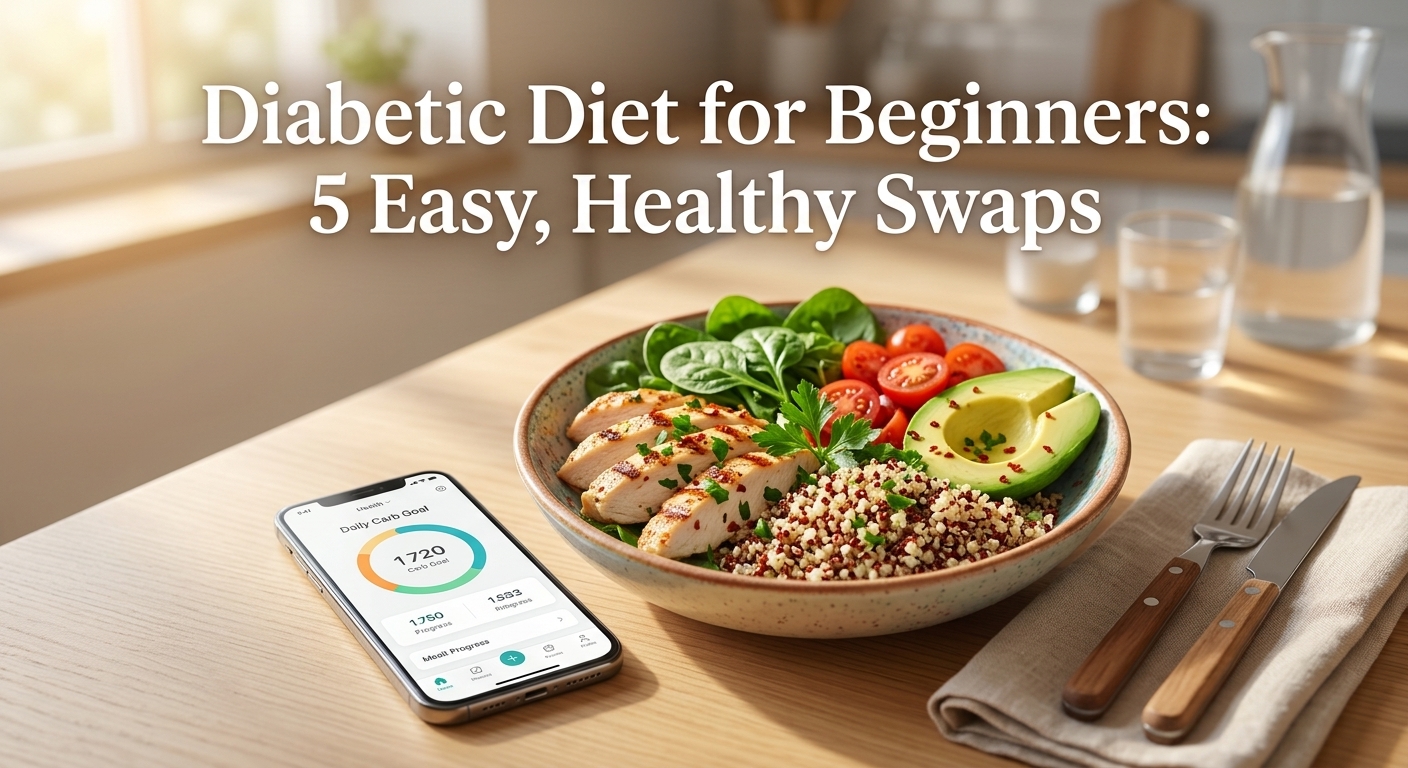
Diabetic Diet for Beginners: 5 Simple Changes for Newly Diagnosed Patients
Hearing the words "you have diabetes" is a moment most people never forget. In an instant, a wave of anxiety hits, quickly followed by a flood of overwhelming questions. What am I allowed to eat now? Do I have to throw out everything in my kitchen? Is my relationship with food ruined forever?
If you are currently sitting at your kitchen table feeling stressed, confused, or even a little angry, please take a deep breath. You do not need to rewrite your entire life overnight, and you absolutely do not have to live on a bland diet of celery sticks and water.
Navigating a diabetic diet for beginners is not about total deprivation; it is about learning how to make smarter, gentler adjustments to the meals you already enjoy. By focusing on small, sustainable food swaps rather than massive restrictions, you can lower your HbA1c, keep your energy steady, and reclaim control over your health without the misery of starvation.
Here are 5 simple, stress-free changes every newly diagnosed diabetes patient can start making today.
1. Upgrade from White to Grain (The Carb Swap)
Carbohydrates are not the enemy, but the type of carbohydrate you choose makes all the difference. Refined "white" carbohydrates (like white bread, white jasmine rice, and standard pasta) are stripped of their fibre. Your body digests them rapidly, causing a sharp, immediate spike in blood glucose levels.
The Simple Change: Swap white rice for brown quinoa, bulgur wheat, or pearled barley. Swap white sandwich bread for dense, seeded wholemeal or granary bread.
Why it works: These intact, complex grains are packed with natural fibre. Fibre acts like a biological brake, slowing down how quickly your body absorbs sugar into the bloodstream and keeping your energy levels smooth.
2. Don’t Drink Your Carbs
One of the fastest ways blood sugar gets out of hand is through liquid sugar. Beverages like regular fizzy drinks, sweetened iced teas, energy drinks, and even 100% natural fruit juices hit your system like a tidal wave because there is zero solid food or fibre to slow them down.
The Simple Change: Swap fruit juices and sugary sodas for sparkling water infused with fresh lime wedges, unsweetened cold-brew teas, or zero-sugar squash.
Why it works: Eliminating liquid sugars instantly removes massive, unnecessary glycemic loads from your day without altering your actual breakfast, lunch, or dinner plates.
3. Rethink Your Side Dishes (The Non-Starchy Shift)
When planning a dinner, most of us instinctively build the meal around the starch—like a mountain of mashed potato or a massive bed of pasta. To balance your blood sugar, we simply need to shift the proportions using the Diabetes Plate Method.
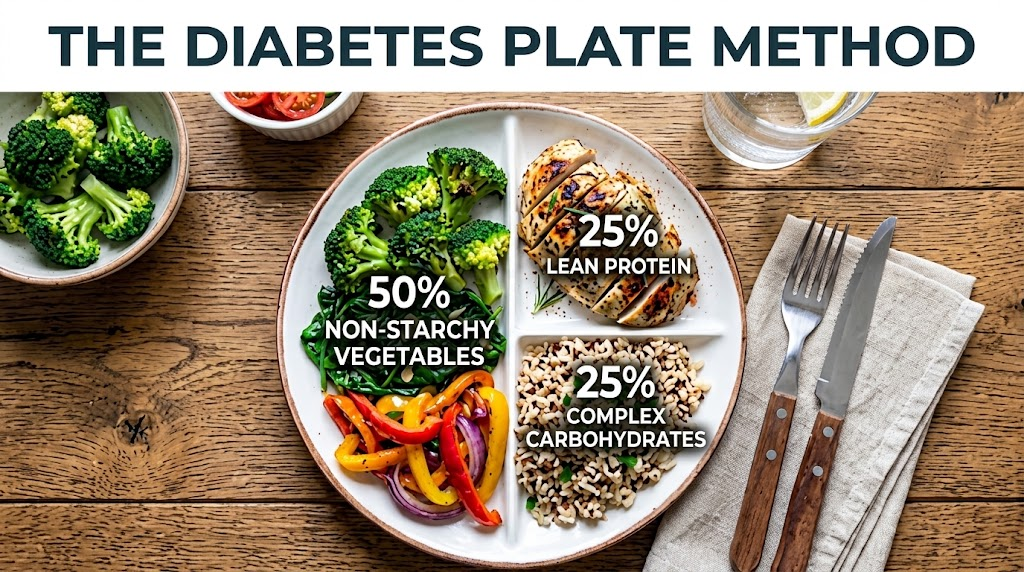
The Simple Change: Make half your plate non-starchy vegetables (like roasted Brussels sprouts, asparagus, or fresh salad greens) before adding your protein and your carbohydrate.
Why it works: Non-starchy vegetables add bulk, crunch, and satisfaction to your meals. They fill you up physically without overloading your body with glucose.
4. Pair Your Fruits with a "Bodyguard"
Many beginners assume they must stop eating fruit entirely due to natural fructose. This is a myth. Whole fruits contain vital vitamins and essential fibre. However, eating a highly glycemic fruit completely on its own can still trigger a mild blood sugar spike.
The Simple Change: Never let a piece of fruit travel alone. Pair an apple, banana, or handful of berries with a handful of unsalted walnuts, almonds, or a spoonful of plain Greek yogurt.
Why it works: The healthy fats and proteins in the nuts or yogurt act like a "bodyguard," delaying gastric emptying and flattening the post-meal glucose curve even further.
5. Decode Labels Before You Buy
Food packaging can be incredibly deceptive. Products marketed as "low-fat" are frequently loaded with added sugar to make up for lost flavour. Meanwhile, snacks labeled "healthy organic" can still be packed with high-fructose corn syrup or refined flour.
The Simple Change: Shift your focus on the nutritional label away from just "Calories" and look closely at "Total Carbohydrates" and "of which sugars", while keeping an eye out for high "Fibre" metrics.
Overwhelmed in the Supermarket? Meet Your 24/7 Digital Coach
Making these changes sounds straightforward on paper, but the real world is messy. You stand in the grocery store aisle looking at a bottle of marinade, a box of crackers, or a new brand of cereal, and the confusion creeps right back in. Is this sauce safe for me? How many carbs are too many for lunch? What can I use instead of regular pasta tonight?
You cannot take your doctor or a registered dietitian to the supermarket with you, but you can take GlucoForager.
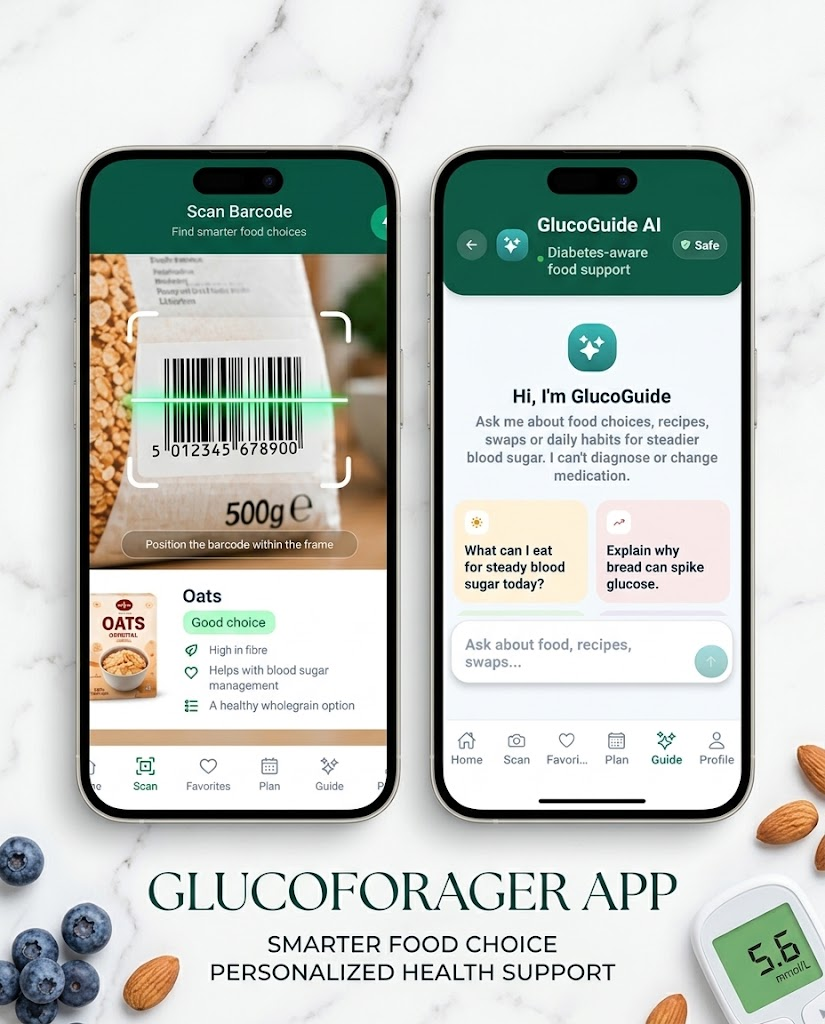
Designed specifically to take the panic out of a newly diagnosed diabetes diet, GlucoForager acts as your personal, 24/7 pocket assistant:
GlucoGuide AI: Unsure about an ingredient or looking for an alternative? Fire up GlucoGuide AI and ask direct questions like: "I'm making spaghetti bolognese, what can I swap regular white pasta for?" or "Is teriyaki sauce going to spike my blood sugar?" You get instant, actionable, and clear guidance without wading through contradictory internet articles.
Instant Barcode & Photo Scan: Walk up to any product, point your phone camera at the barcode, and receive an immediate, colour-coded diabetes verdict. The app instantly highlights the carbs, sugars, and fibres so you can make an educated choice in under three seconds.
A Target Built for You: No generic calculations. GlucoForager customises a visual carb tracking ring on your home screen tailored exactly to your specific profile—whether that is Type 1, Type 2, prediabetes, or gestational diabetes.
A diabetes diagnosis is a major life transition, but it does not mean the end of delicious meals. It is simply the beginning of eating with awareness.
Take the guesswork out of your diet. Download GlucoForager for free today on the iOS App Store or Google Play Store, and let your phone do the hard work for you.
Frequently Asked Questions
Do I need to buy expensive "diabetic" specialty foods?
No. In fact, you should completely avoid them. Foods specifically marketed as "diabetic chocolate" or "diabetic biscuits" are often highly processed, expensive, and can cause stomach upset due to alternative sweeteners. Sticking to standard, whole foods like vegetables, lean meats, nuts, and whole grains is healthier and much cheaper.
Can I ever eat bread again as a beginner?
Yes. You do not need to cut bread out entirely. The key is to swap white bread for 100% wholemeal, stoneground, or seeded rye varieties. Pay close attention to portion sizes, and try pairing your slice of toast with healthy fats and protein—like avocado and an egg—to slow down digestion.
How long does it take for dietary changes to lower blood sugar?
Everyone's body responds differently, but many newly diagnosed patients notice improvements in their daily post-meal finger-prick or continuous glucose monitor (CGM) readings within just a few days of switching to complex carbs and balancing their plates. Improvements in your long-term HbA1c levels are typically measured every 3 months.
App Feature Highlight: Save Your Favourites
Once you find a low-carb breakfast or quick dinner swap that works perfectly for your blood sugar, you can tap the heart icon inside GlucoForager to save it to your Favourites & History. Building a custom library of your own reliable, safe meals makes sticking to your new lifestyle effortless.