
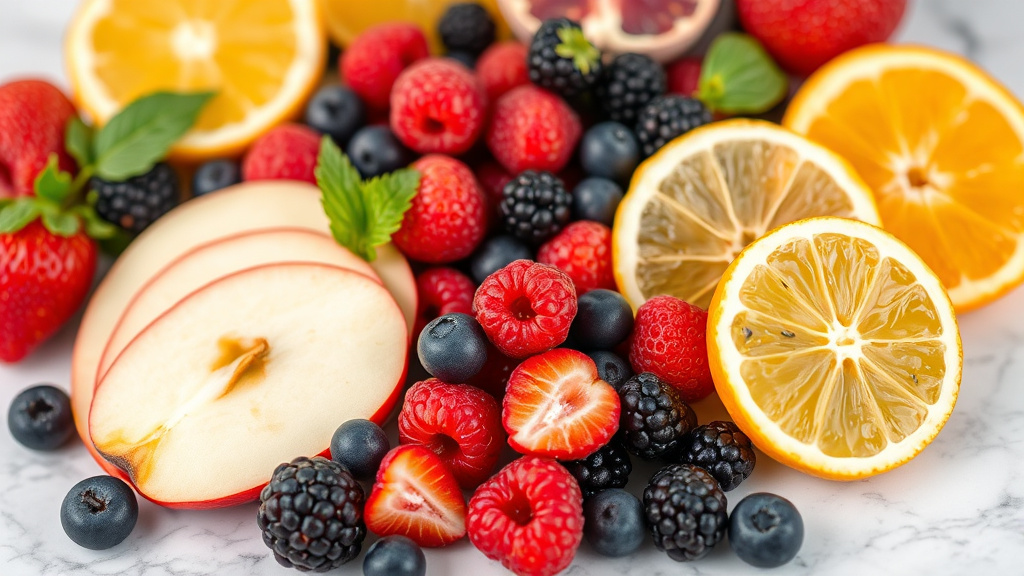
One of the most common pieces of advice given to people newly diagnosed with diabetes is to be careful with fruit. Sometimes it goes further: avoid fruit, it is full of sugar. This advice creates confusion, anxiety, and often leads people to cut out one of the healthiest food groups available — unnecessarily.
The reality of fruit and blood sugar is more nuanced than a simple yes or no. Here is what the evidence actually shows, and what it means for your daily choices.
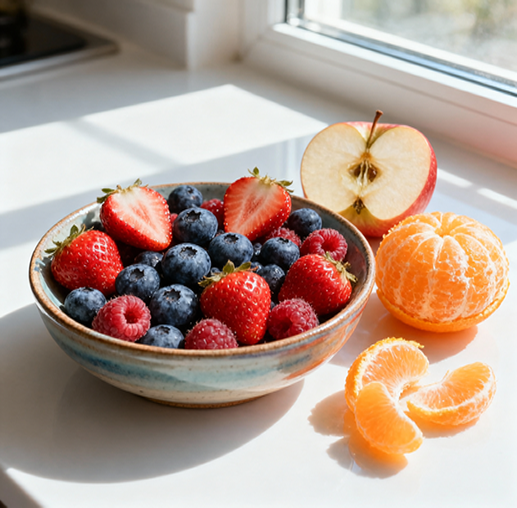
Does fruit contain sugar? Yes. Is it the same as added sugar? No.
Fruit contains fructose, a naturally occurring sugar, alongside fibre, water, vitamins, minerals, and antioxidants. The presence of fibre is what makes whole fruit fundamentally different from added sugar or fruit juice: fibre slows the digestion and absorption of fructose, resulting in a more gradual and moderate rise in blood glucose.
When you drink fruit juice, you get the fructose without most of the fibre — and the glucose response is significantly sharper. This is why whole fruit and fruit juice affect blood sugar so differently, despite both technically containing sugar.
Which fruits have the lowest impact on blood sugar?
Fruits are ranked by their glycaemic index (GI), which measures how quickly they raise blood glucose. Lower GI fruits cause a slower, more moderate glucose rise.
Low-GI fruits (best choices for blood sugar management)
• Berries — blueberries, strawberries, raspberries, blackberries. GI of 25–40. High in fibre and antioxidants, very low in sugar relative to most fruits.
• Cherries — GI of around 22. Surprisingly low despite their sweetness.
• Apples and pears — GI of 35–40. Their high fibre content slows sugar absorption significantly.
• Citrus fruits — oranges, grapefruits, lemons. GI of 35–50. High in vitamin C and fibre.
• Peaches and plums — GI of 35–45. Lower in sugar than many other fruits.
Higher-GI fruits (eat in smaller portions)
• Watermelon — GI of around 72, though its glycaemic load per typical portion is actually low because of its high water content.
• Pineapple — GI of 59. Higher than most fruits, manageable in small portions with a protein source.
• Mango — GI of 55–60. Delicious but higher in sugar than berries or apples.
• Grapes — GI of 53–59. Easy to eat large quantities without realising, which increases the carbohydrate load.
• Dates and dried fruit — very high in sugar per gram once water is removed. Small portions only.
Does the form of fruit matter?
Yes — significantly. Whole fruit, fruit blended into a smoothie, and fruit juice all have different effects on blood sugar, in that order from most to least blood-sugar-friendly.
Whole fruit retains all its fibre and requires physical chewing and digestion, which slows glucose absorption. A blended smoothie partially breaks down fibre structure, making it slightly faster to digest. Juice removes most of the fibre entirely, causing a much faster glucose response — similar to drinking a sugary drink.
Dried fruit concentrates the sugar dramatically. A small handful of raisins contains roughly the same sugar as a large bunch of fresh grapes. Both can be part of a diabetic diet, but the portion sizes need to be very different.
The pairing principle — how to reduce fruit's effect on blood sugar
Eating fruit alongside protein or fat significantly moderates its effect on blood glucose. The protein and fat slow digestion, reducing the rate at which fructose enters the bloodstream.
In practice, this means eating an apple with a small handful of almonds rather than alone. Greek yoghurt with berries rather than berries on their own. A piece of cheese alongside a pear. These combinations are more blood-sugar-friendly than the same fruit eaten in isolation.
Should people with diabetes eat fruit every day?
For most people with Type 2 diabetes, prediabetes, and many people with Type 1, whole fruit eaten in appropriate portions is not only acceptable but beneficial. The fibre, vitamins, minerals, and antioxidants in fruit contribute to overall health in ways that matter for diabetes management.
The key word is portions. One or two portions of whole fruit per day, choosing lower-GI varieties where possible, eating with a meal or alongside protein, and avoiding fruit juice — this approach allows most people with diabetes to enjoy fruit without significant blood sugar consequences.
Individual responses vary. Some people find certain fruits spike their blood sugar more than others. If you are monitoring your glucose levels, testing after eating specific fruits is the most reliable way to understand your personal response.
The bottom line on fruit and diabetes
Fruit does not need to be eliminated from a diabetic diet. The evidence does not support cutting out whole fruit, and doing so removes a food group with genuine health benefits. What matters is choosing lower-GI options, eating appropriate portions, pairing fruit with protein or fat, and avoiding fruit juice.
GlucoForager accounts for fruit as part of its meal suggestions — not eliminating it, but integrating it intelligently alongside the other foods in your diet to support stable blood sugar throughout the day.
Take the guesswork out of eating with diabetes
GlucoForager is your daily food decision assistant. Scan your fridge, get instant blood-sugar-safe meal suggestions, food swaps, and a daily meal planner — all personalised to your diabetes type and preferences.
Free to start · Premium from $5.99/month · App Store & Google Play