
Eating out with diabetes is one of the first things many people with diabetes worry about when in restaurants. Social meals suddenly feel like a minefield — too many unknowns, too little control over what goes into the food, and the added awkwardness of making a fuss about your order when everyone else is ordering freely.
The good news is that eating out with diabetes is entirely manageable. You do not need to avoid restaurants. You do not need to interrogate the chef. You need a small set of reliable strategies that work across almost any cuisine, any occasion, and any menu.
The biggest challenges of eating out with diabetes
Restaurant meals differ from home-cooked food in several predictable ways that make blood sugar management harder. Portions are typically larger. Sauces and dressings often contain hidden sugar. Bread arrives at the table before you have ordered anything. Chips come with almost everything. And the social pressure to just eat whatever everyone else is eating is real.
None of these challenges are insurmountable. Recognising them is the first step to navigating them.
General strategies that work at any restaurant
Look at the menu before you arrive
Most restaurants publish their menus online. Spending two minutes scanning it before you leave the house removes the pressure of making a good decision while hungry, with social distractions around you, and a server waiting. You can identify the best options in advance and arrive knowing what you are going to order.
Ask for sauces and dressings on the side
This is the single most useful request you can make at a restaurant. Most sweet and sour sauces, teriyaki glazes, salad dressings, and compound butters contain significant amounts of sugar or refined carbohydrates. Having them served separately means you control how much you use — or whether you use them at all.
Swap chips for a side salad or extra vegetables
Most restaurants will do this without hesitation. Chips are one of the highest-carbohydrate items on any menu. A side salad or a portion of steamed or roasted vegetables keeps the meal satisfying while significantly reducing the total carbohydrate load.
Treat the bread basket as optional
Bread before a meal adds a carbohydrate load before your main course has even arrived. If you are going to eat bread, having a small amount with your meal rather than on an empty stomach before it moderates the glucose response considerably.
Order protein and vegetables as the anchor of your meal
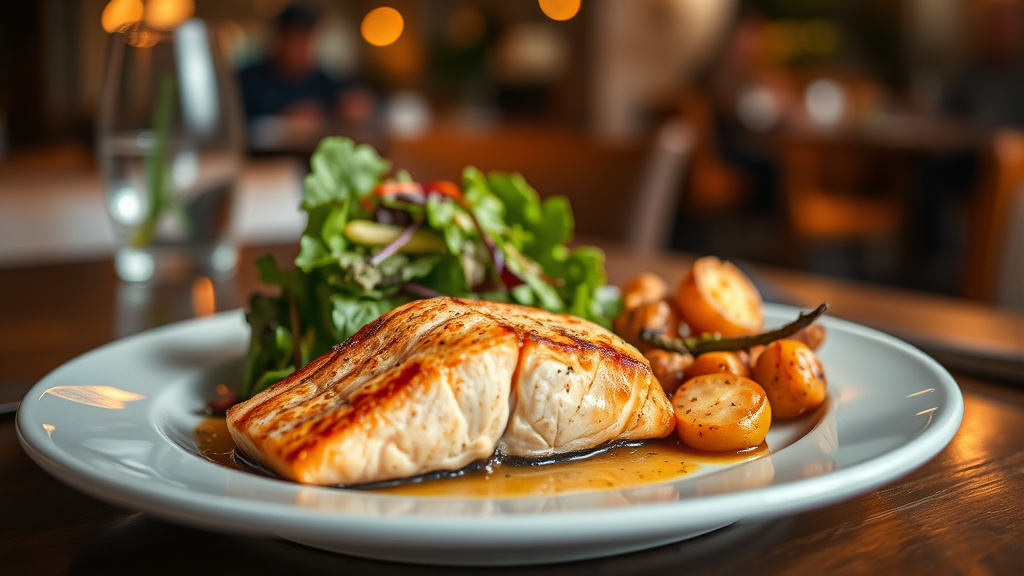
Grilled fish, roasted chicken, a steak, or any other protein-led main course paired with non-starchy vegetables is a reliable choice at almost any restaurant. The carbohydrates in a meal like this come from whatever accompaniments you choose — and you have control over that.
How to order at specific cuisines
Italian
Choose grilled fish or meat over pasta. If you want pasta, ask for a smaller portion and a larger salad alongside it. Tomato-based sauces are preferable to cream-based sauces. Bruschetta, risotto, and pizza are high-carbohydrate choices — manageable occasionally, not ideal as a regular restaurant order.
Indian
Tandoori dishes — chicken, fish, or lamb cooked in a clay oven — are some of the most blood-sugar-friendly choices on any Indian menu. Dal (lentil curry) is high in protein and fibre. Avoid creamy sauces like korma or butter chicken if you are concerned about blood sugar, or ask for a smaller rice portion and supplement with raita and vegetable sides.
Chinese
Steamed dishes are a reliable choice. Stir-fried dishes with light sauce work well. Avoid sweet and sour, honey chilli, and hoisin-glazed dishes, which are typically very high in sugar. Rice and noodles are high in carbohydrates — choose a smaller portion or ask for extra vegetables instead.
Japanese
Sashimi (raw fish without rice) is one of the best restaurant options for blood sugar management available. Grilled fish, edamame, miso soup, and most small plate dishes are good choices. Sushi rice is moderately high-carbohydrate but its portion sizes are naturally small. Tempura and katsu dishes are battered and fried — higher in carbohydrates.
Mediterranean and Middle Eastern
Grilled fish, lamb kebabs, hummus, tabbouleh, and roasted vegetables are all excellent choices. Falafel is moderately high-carbohydrate but paired with salad and protein it works well. Pitta bread in moderation is manageable — one piece rather than several.
What about dessert?
Dessert at a restaurant is often where the most sugar appears in a meal. The most blood-sugar-friendly options are typically a cheese plate, fresh fruit (if available), or a small amount of a dark chocolate dessert. If you want to enjoy dessert, sharing it rather than having a full portion, or ordering something and eating half, are both practical strategies.
The important thing is not to feel like diabetes means never enjoying dessert at a restaurant. It means being informed about the choices you are making and finding an approach that works for your blood sugar without making every meal out feel like a medical exercise.
The question you ask yourself before every restaurant meal
What is the most blood-sugar-friendly combination I can order from this menu, that I will actually enjoy? Not the most perfect option. Not the most restrictive. The one that balances blood sugar management with genuinely enjoying the experience of eating out — because that balance is what makes any approach sustainable long-term.
GlucoForager helps you build the same decision-making instinct at home. The more you use it to understand which foods and combinations work for your blood sugar, the more naturally those principles carry into restaurants and social situations.
Take the guesswork out of eating with diabetes
GlucoForager is your daily food decision assistant. Scan your fridge, get instant blood-sugar-safe meal suggestions, food swaps, and a daily meal planner — all personalised to your diabetes type and preferences.
Free to start · Premium from $5.99/month · App Store & Google Play