
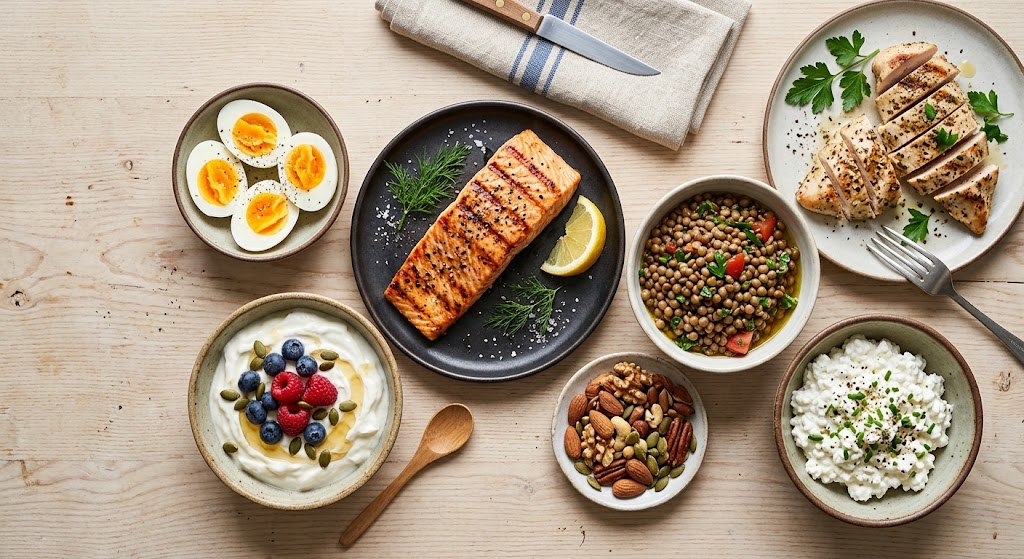
Protein is one of the most valuable tools in managing blood sugar with diabetes — and one of the most underused. Unlike carbohydrates, protein does not cause a significant blood sugar rise. Unlike fat, protein actively supports muscle maintenance, satiety, and metabolic health. And unlike the complex calculations required to manage carbohydrate intake, increasing protein is simple: eat more of it at every meal.
Here are 10 genuinely easy high-protein meals designed for people with diabetes — meals that are filling, blood-sugar-friendly, and require no special equipment or advanced cooking skills.
Why high-protein meals work well for blood sugar
Protein slows gastric emptying — the rate at which food leaves the stomach and enters the small intestine. When protein is eaten alongside carbohydrates, this slowing effect reduces the speed at which glucose enters the bloodstream, moderating the post-meal spike. Higher-protein meals also keep you fuller for longer, reducing the likelihood of snacking on foods that raise blood sugar between meals.
10 high-protein meals
1. Greek yoghurt power bowl (Breakfast — 5 minutes)
Full-fat plain Greek yoghurt (200g, 20g protein) topped with a small handful of mixed berries, a tablespoon of chia seeds, a tablespoon of ground flaxseed, and a small handful of walnuts. No cooking required. High in protein, high in fibre, low in refined carbohydrates.
2. Eggs three ways (Breakfast or lunch — 10 minutes)
Three eggs cooked any way — scrambled, poached, or as an omelette. Served with smoked salmon (adds a further 15g protein), wilted spinach, and a slice of rye toast. Around 35g protein in a ten-minute meal.
3. Tuna and avocado salad (Lunch — 5 minutes)
A tin of tuna in water (25g protein) mixed with half an avocado, lemon juice, a handful of cherry tomatoes, cucumber, and mixed leaves. No cooking. Around 28g protein, virtually no refined carbohydrates.
4. Chicken and quinoa bowl (Lunch or dinner — 20 minutes)
A cooked chicken breast (30g protein) sliced over a portion of quinoa (8g protein per cooked cup), with roasted peppers and courgette, olive oil, and fresh herbs. Quinoa is one of the few plant foods that is a complete protein, making it particularly valuable combined with chicken.
5. Lentil and spinach curry (Dinner — 25 minutes)
Red lentils cooked with chopped tomatoes, spinach, garlic, ginger, cumin, and garam masala. Lentils provide around 18g protein per cooked cup alongside significant fibre, which makes them one of the most blood-sugar-friendly carbohydrate sources available. Serve with a small portion of brown rice or on its own.
6. Baked salmon with roasted vegetables (Dinner — 25 minutes)
A salmon fillet (around 30g protein) baked in the oven with roasted broccoli, asparagus, and cherry tomatoes. Season with lemon, garlic, and olive oil. Ready in 25 minutes with minimal hands-on time. One of the most nutritionally complete single-pan meals for people with diabetes.
7. Turkey and vegetable stir-fry (Dinner — 20 minutes)
Turkey mince cooked with mixed vegetables (broccoli, peppers, snap peas, mushrooms) in a light sauce of garlic, ginger, tamari, and a small amount of sesame oil. Served with cauliflower rice or a small portion of brown rice. Around 35g protein per serving.
8. Cottage cheese and cucumber plate (Snack or light lunch — 2 minutes)
Full-fat cottage cheese (200g, 22g protein) with sliced cucumber, cherry tomatoes, a drizzle of olive oil, and black pepper. One of the highest-protein, lowest-effort options available. Works as a snack, a light lunch, or a side dish.
9. Prawn and avocado lettuce cups (Lunch or starter — 10 minutes)
Cooked king prawns (200g, 24g protein) with diced avocado, cherry tomatoes, lime juice, and a small amount of chilli served in large romaine lettuce leaves. No cooking required (using pre-cooked prawns). Low in carbohydrates, high in protein and healthy fat.
10. Chilli con carne (Dinner — 35 minutes, makes 4 portions)
Lean beef mince cooked with kidney beans, chopped tomatoes, onion, garlic, cumin, and paprika. Kidney beans add protein and fibre alongside the beef, making this a particularly high-protein, high-fibre meal. Serve with a small portion of brown rice or with cauliflower rice. Freezes well — make a large batch on Sunday and eat across the week.
The protein target for people with diabetes
General dietary guidelines suggest 0.8g of protein per kilogram of body weight per day. Many diabetes specialists and nutritionists recommend higher intakes — around 1.2–1.6g per kilogram — particularly for people trying to maintain muscle mass while managing their weight. A 75kg person at the higher end of this range would aim for around 90–120g of protein per day.
This is achievable without protein supplements by eating protein-rich foods at every meal: eggs or Greek yoghurt at breakfast, chicken, fish, or legumes at lunch, and a substantial protein source at dinner.
Take the guesswork out of eating with diabetes
GlucoForager is your daily food decision assistant. Scan your fridge, get instant blood-sugar-safe meal suggestions, food swaps, and a daily meal planner — all personalised to your diabetes type and preferences.
Free to start · Premium from $5.99/month · App Store & Google Play