
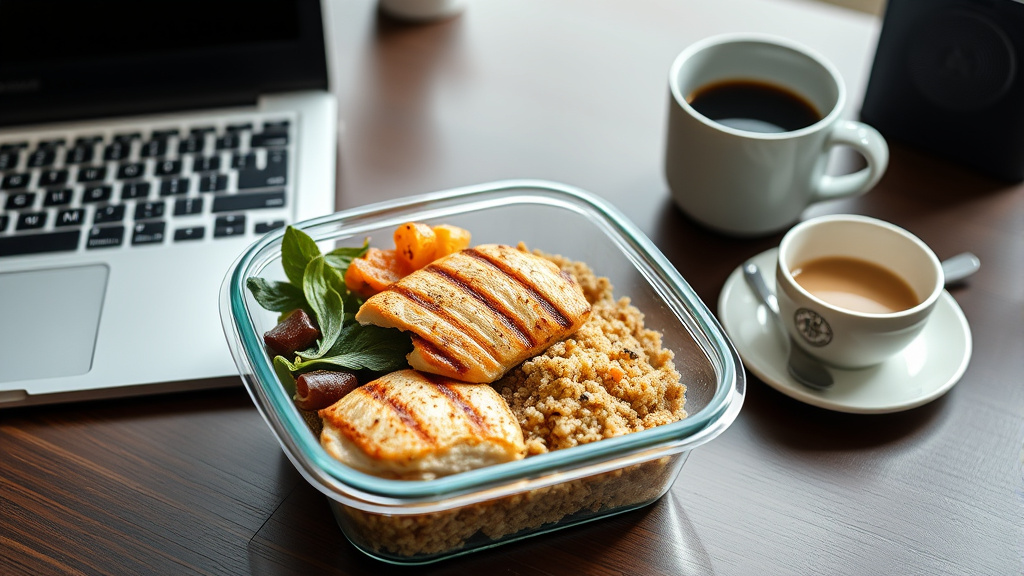
Workdays create some of the most reliably difficult conditions for managing blood sugar. You are often unable to control your schedule. Meals get delayed or skipped. Available food options may be limited to whatever is in the work canteen, the nearest café, or the vending machine. Social eating — team lunches, client dinners, office birthday cake — creates pressure to eat in ways that do not align with your needs.
None of this makes managing diabetes at work impossible. It makes preparation more important and flexibility more necessary. Here is a practical approach that works for most working schedules and most workplace environments.
The three most common work-related blood sugar problems
Skipping or delaying meals
Meetings that run over, back-to-back calls, unexpected deadlines — the working day is full of things that push meals back or eliminate them entirely. For people with diabetes, this creates unpredictable blood sugar patterns: glucose drops during the wait, then spikes when a large meal is finally eaten.
The most effective solution is not rigid meal scheduling — it is having a strategy for the gap. A small, blood-sugar-neutral snack (a handful of nuts, a boiled egg, a small piece of cheese) can bridge a delayed lunch without causing a spike and without requiring you to leave your desk for a full meal.
Eating whatever is available rather than what works
Office food environments are rarely designed for blood sugar management. Canteen options tend toward high-carbohydrate choices. Client meetings often involve pastries or sandwiches. The path of least resistance is whatever is offered.
The counter-strategy is bringing food that works rather than relying on what is available. Not every day — but having your own lunch prepared three or four days a week significantly reduces the number of days you are dependent on whatever is in front of you.
The afternoon energy crash
The 3pm slump — characterised by low energy, difficulty concentrating, and a strong craving for something sweet — is frequently a blood sugar event. A high-carbohydrate lunch (a large sandwich, pasta from the canteen, a meal deal with a soft drink) causes a glucose spike that is followed by a crash in the early afternoon.
A protein and vegetable-focused lunch, with a modest carbohydrate portion, avoids this cycle. The energy sustained through the afternoon is not just more comfortable — it is a sign that blood sugar has remained stable.
Practical strategies for eating well at work
Batch cook on Sundays for the week
Spending 60–90 minutes on Sunday preparing food for the week removes the daily decision burden of workplace eating. A batch of roasted chicken, a large salad base (undressed, so it stays fresh), a container of mixed nuts for snacking, and a few boiled eggs covers lunches and snacks for most of the working week.
Master three quick desk-friendly lunches
Having three reliable go-to lunches that are easy to prepare, portable, and blood-sugar-friendly removes most of the daily decision friction. Good options: a large salad with tinned tuna and olive oil; a Greek yoghurt with berries and nuts; a chicken and vegetable wrap in a wholegrain or lettuce wrap. Rotate between them. Prepare them the night before.
Manage the office snack environment
Most offices have ambient snacks — biscuits in meeting rooms, a communal biscuit tin, birthday cakes, someone's leftover treats. The most effective approach is not willpower — it is having your own snacks visible and accessible. A small container of mixed nuts, a portion of cheese and crackers, or a piece of fruit at your desk reduces the pull of whatever is being offered elsewhere.
Navigate work lunches and client meals
When eating out for work, the strategies from the eating-out post apply: scan the menu in advance if possible, choose protein-led main courses, ask for sauces on the side, and swap chips for salad or vegetables. You do not need to explain your dietary choices to colleagues or clients — ordering sensibly at a restaurant is not conspicuous.
Blood sugar and work performance
Stable blood sugar is not only a health goal — it is a performance advantage. The cognitive function required for focused work, clear communication, and good decision-making all deteriorate during blood sugar fluctuations. The afternoon crash that follows a high-carbohydrate lunch is not just uncomfortable — it represents a genuine reduction in cognitive capacity.
People who eat in ways that support stable blood sugar throughout the working day consistently report better afternoon focus, fewer energy dips, and a more consistent ability to perform — regardless of whether they have diabetes.
When the day does not go to plan
Even with good preparation, working days can be unpredictable. Meetings run long. Plans change. The lunch you prepared gets left at home. For these moments, GlucoForager gives you immediate practical guidance on what to eat from whatever is available — whether that is the contents of a nearby shop, the options at a work canteen, or whatever is in your desk drawer. It reduces the gap between good intentions and actual food decisions in real-world conditions.
Take the guesswork out of eating with diabetes
GlucoForager is your daily food decision assistant. Scan your fridge, get instant blood-sugar-safe meal suggestions, food swaps, and a daily meal planner — all personalised to your diabetes type and preferences.
Free to start · Premium from $5.99/month · App Store & Google Play