
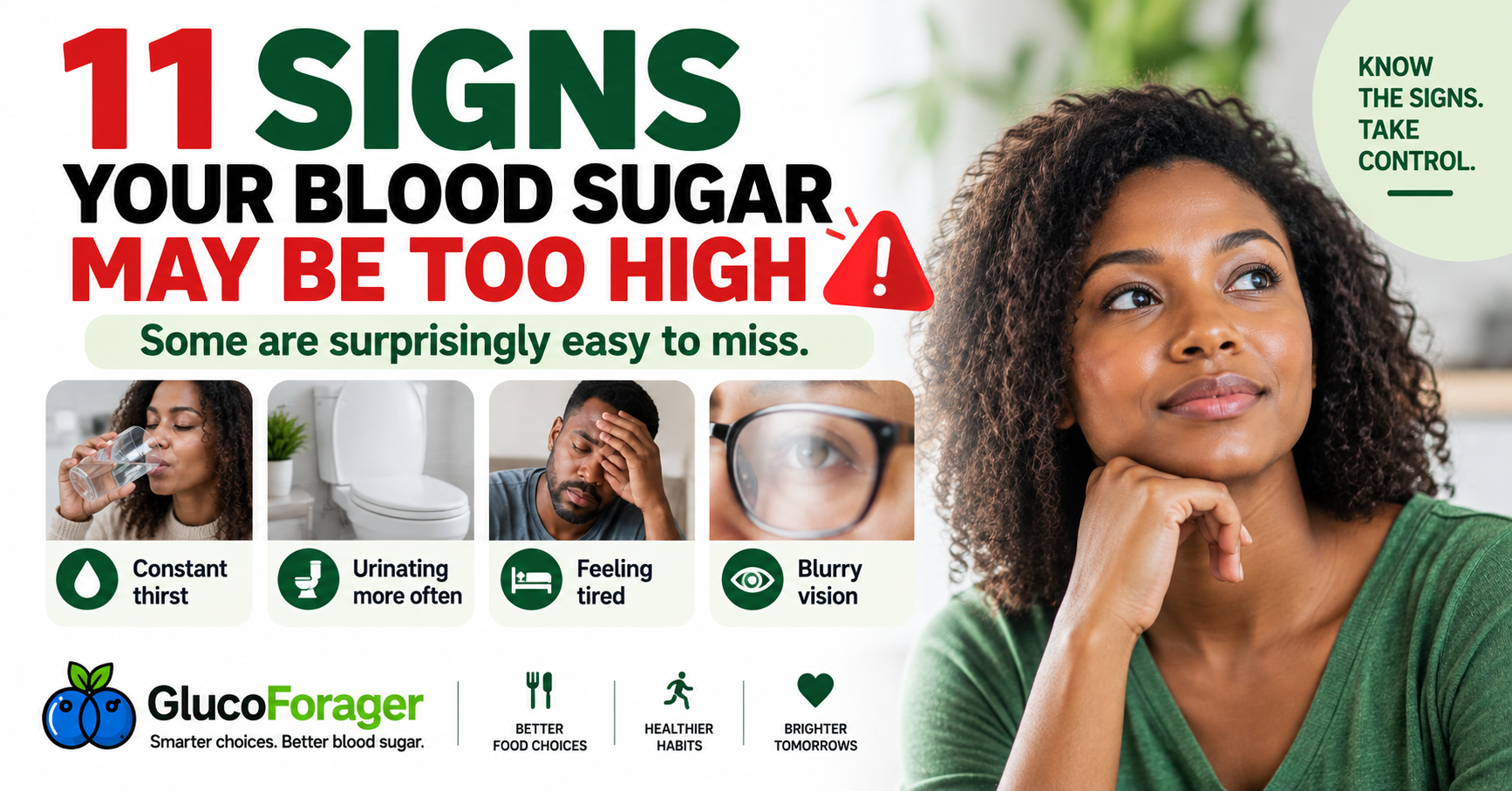
The signs blood sugar is high can be surprisingly easy to miss. You may feel thirstier than usual, wake during the night to use the toilet, feel tired despite sleeping well, or notice changes in your vision. Because these symptoms can develop gradually, they are sometimes dismissed as everyday problems.
In fact, symptoms of type 2 diabetes can develop gradually over several years, and some people have symptoms so mild that they don't notice them at all. Others have no obvious symptoms.
That makes seemingly ordinary changes — being thirstier than usual, waking during the night to use the toilet, feeling exhausted or noticing your vision changing — worth paying attention to.
One symptom alone does not mean you have diabetes. But when several appear together or persist, it may be time to speak to a healthcare professional.
Here are 11 signs worth knowing.
1. You're constantly thirsty 💧
Everyone gets thirsty.
But feeling much thirstier than usual, particularly when you're drinking plenty and still don't feel satisfied, can be associated with high blood glucose.
When glucose levels become high, the body tries to remove excess glucose through urine. Losing more fluid can leave you increasingly thirsty.
Pay attention when: unusual thirst occurs repeatedly, especially alongside frequent urination.
2. You're going to the toilet more — especially at night 🚽
This is one people sometimes dismiss as simply drinking too much water.
Frequent urination is a recognised symptom of diabetes, and Diabetes UK specifically highlights going for a wee frequently, particularly at night, as one of the common warning signs.
If you've suddenly started waking multiple times during the night to urinate, don't automatically dismiss the change.
3. You're tired even after sleeping 😴
Everyone has exhausting days.
But persistent fatigue that doesn't seem proportional to your sleep or activity deserves attention.
Insulin helps glucose move from your bloodstream into cells where it can be used for energy. When this system isn't working properly, high blood glucose can coexist with cells not accessing energy normally.
That can contribute to feeling unusually tired.
4. Your vision becomes blurry 👁️
Suddenly struggling to focus?
Don't assume you simply need new glasses.
Blurred vision is a recognised symptom of diabetes and high blood glucose.
Persistent or unexplained changes in vision should be assessed rather than ignored.
5. Cuts seem to take forever to heal 🩹
Think about small cuts, blisters or wounds that don't seem to be improving as expected.
Sores or wounds that are slow to heal are another recognised diabetes symptom.
This is particularly important when problems involve the feet.
Don't wait for a wound to become severe before seeking professional advice.
6. You keep getting infections 🔁
An infection once in a while isn't unusual.
Repeated infections are different.
People with diabetes may experience frequent infections, including urinary tract, skin and yeast infections. Diabetes UK also lists genital itching or thrush among possible symptoms.
Recurring infections are worth discussing with your healthcare professional, particularly when accompanied by other symptoms on this list.
7. You're losing weight without trying ⚖️
For many people, unexpected weight loss sounds positive.
It isn't always.
Unexplained weight loss is a recognised symptom of diabetes.
Weight loss without intentionally changing your diet, activity or lifestyle should not simply be celebrated and forgotten.
Find out why it is happening.
8. You're unusually hungry — even after eating 🍽️
If you've eaten a proper meal but quickly feel extremely hungry again, pay attention to whether it has become a pattern.
Increased hunger is another possible symptom of diabetes.
Hunger has countless possible causes, so this symptom alone tells you very little. It becomes more meaningful when accompanied by symptoms such as thirst, frequent urination, fatigue or unexplained weight loss.
9. Your hands or feet feel numb or tingly 🦶
Pins and needles occasionally happen to everyone.
Persistent pain, numbness or tingling in the hands or feet, however, can occur in people with type 2 diabetes.
Long-term high blood glucose can damage nerves, which is one reason diabetes management and regular health checks matter.
Persistent numbness or tingling deserves medical assessment rather than self-diagnosis.
10. You wake up extremely thirsty or with a dry mouth 🌙
This one can be easy to overlook.
Dry mouth itself has many possible causes, so waking with a dry mouth does not mean you have diabetes.
But consider the bigger pattern.
If you're also extremely thirsty and urinating frequently, those are established symptoms associated with high blood glucose.
The combination matters more than an isolated dry mouth.
11. You simply don't feel like yourself
Sometimes the warning isn't one dramatic symptom.
It's several small changes:
More thirsty. More tired. More bathroom trips. Vision slightly different. A wound taking longer to heal.
Individually, each can be easy to explain away.
Together, they deserve attention.
And this is exactly why type 2 diabetes can go undetected: symptoms can develop gradually and be subtle enough to miss.
So, how many of these signs do you recognise?
Don't use this article to diagnose yourself.
Having one or several of these symptoms doesn't automatically mean you have diabetes. Many other conditions can cause similar symptoms.
But don't ignore a persistent pattern either.
If several of these symptoms sound familiar or they persist, don't rely on symptoms alone. Speak with a doctor or qualified healthcare professional about having your blood glucose checked. Testing is the appropriate way to determine whether your blood sugar levels may be too high.
Early diagnosis matters because prolonged high blood glucose can affect the eyes, kidneys, nerves, heart and other parts of the body.
One more thing: don't aim for perfect eating
Managing blood sugar isn't about being perfect at every meal.
Start with repeatable decisions:
Choose more fibre. Add protein. Watch portions. Plan meals before you're hungry. Replace foods that don't work well for you with alternatives you actually enjoy.
That's the idea behind GlucoForager — helping make everyday food decisions easier through food swaps, meal planning and practical guidance.
Small decisions become habits. Habits add up. 💚