
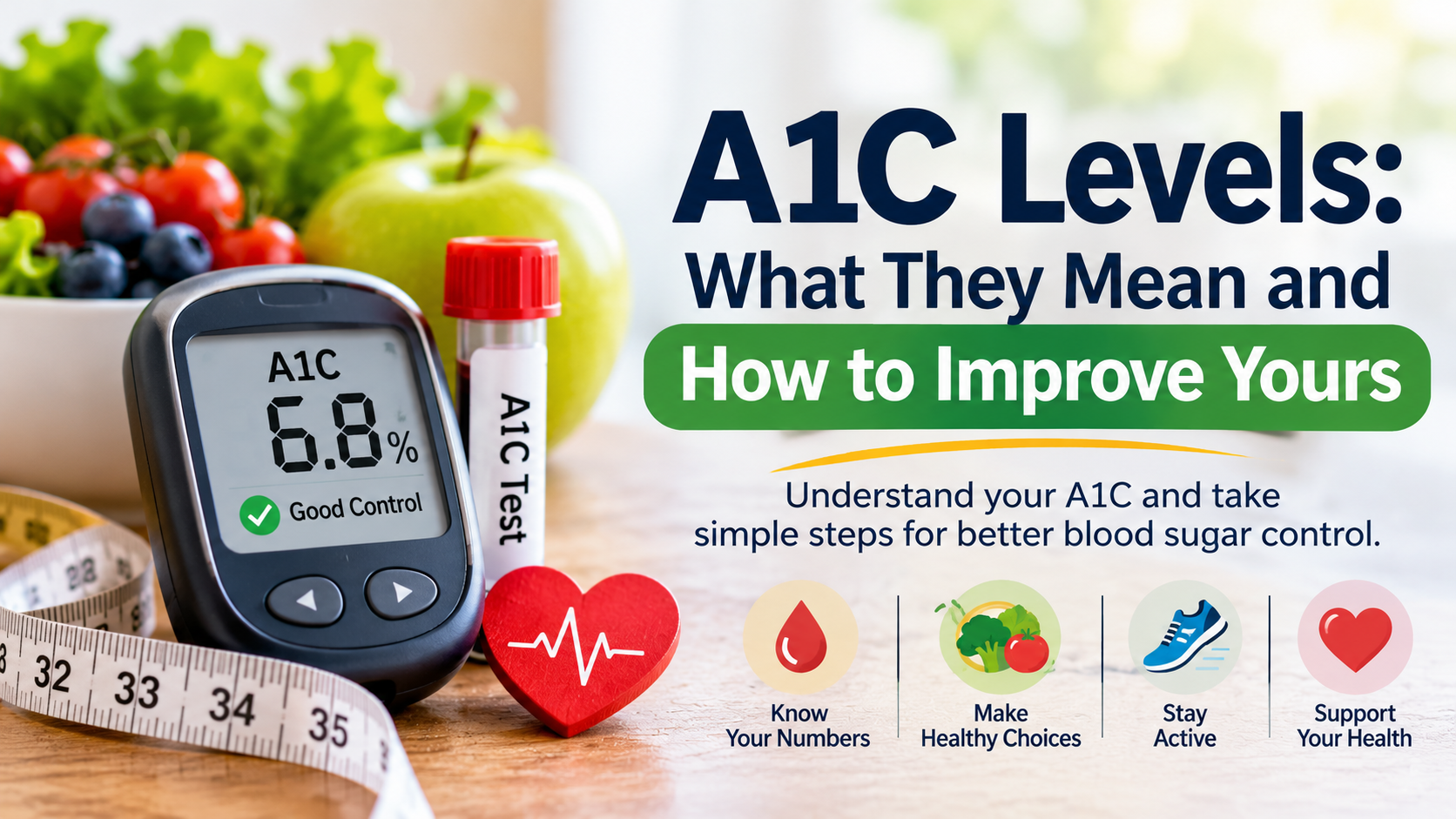
A1C levels show your average blood sugar over the last 2–3 months. They help diagnose diabetes, track how well your diabetes is managed, and guide your care team in choosing the best treatment for you.
What Are A1C Levels?
Your A1C level (also called HbA1c or "glycated hemoglobin") is a blood test that measures the percentage of hemoglobin (a protein in your red blood cells) coated with sugar. This test gives an average of your blood sugar levels over the past 8–12 weeks, not just a single moment like a fingerstick test.
Doctors use A1C levels to diagnose prediabetes and diabetes, and to see how well your blood sugar is controlled if you already have diabetes. The higher your A1C, the higher your average blood sugar has been.
Why Do A1C Levels Matter?
Keeping your A1C level in a healthy range lowers your risk of diabetes complications, such as heart disease, kidney problems, nerve damage, and vision loss. High A1C levels mean your blood sugar has been high for a while, which can damage your body over time.
Regular A1C checks help you and your care team spot problems early and adjust your treatment plan if needed. For most adults with diabetes, the American Diabetes Association recommends an A1C goal below 7% (which is about 154 mg/dL or 8.6 mmol/L average blood sugar). Your personal target may be higher or lower, so talk to your care team about what’s right for you.
A1C Levels Chart: What’s Normal, Prediabetes, and Diabetes?
Here’s a simple chart showing what different A1C levels mean for adults:
| A1C (%) | Average Blood Sugar (mg/dL) | Average Blood Sugar (mmol/L) | What It Means |
|---|---|---|---|
| Below 5.7 | Below 117 | Below 6.5 | Normal |
| 5.7–6.4 | 117–137 | 6.5–7.6 | Prediabetes |
| 6.5 or higher | 140 or higher | 7.8 or higher | Diabetes |
These ranges are based on guidelines from the American Diabetes Association and Diabetes UK. Your care team may set a different A1C goal based on your age, health, and other factors.
A1C Levels for Type 2 Diabetes
If you have type 2 diabetes, your care team will usually recommend an A1C target below 7% (about 154 mg/dL or 8.6 mmol/L). Some people, especially older adults or those with other health conditions, may have a higher or lower target. The main goal is to keep your A1C as close to your target as safely possible, without causing frequent low blood sugar (hypoglycemia).
For people with type 2 diabetes, keeping A1C levels in the recommended range can help prevent or delay complications. If your A1C is above your target, your care team may suggest changes to your food, activity, or medications.
How to Improve Your A1C Levels: Practical Steps
Your daily choices can make a big difference in your A1C level. Here are some proven ways to lower your A1C and keep it in a healthy range:
- Eat balanced meals: Focus on non-starchy vegetables, lean protein, whole grains, and healthy fats. Limit added sugars and refined carbs. Try to fill half your plate with vegetables at each meal.
- Watch your portions and carbs: Know how many grams of carbs are in your meals and snacks. Most people with diabetes aim for 30–60 grams of carbs per meal, but your needs may differ. Use food labels or a carb-counting app to help.
- Be active most days: Aim for at least 150 minutes per week of moderate activity, like brisk walking, cycling, or swimming. Even short bouts of movement help lower blood sugar.
- Take medications as prescribed: If you use diabetes medicine, take it as directed. Never change your dose without talking to your care team.
- Check your blood sugar: If your care team has advised home monitoring, track your numbers and share them at your appointments. This helps spot patterns and make changes if needed.
- Manage stress and get enough sleep: Both stress and poor sleep can raise blood sugar. Try relaxation techniques and aim for 7–9 hours of sleep per night.
For more tips on healthy eating, see our guides: Diabetic Diet: What to Eat for Better Blood Sugar Control and How Many Carbs Per Day for Diabetics? A Simple Guide.
How Often Should You Check Your A1C Level?
Most adults with diabetes should have an A1C test at least twice a year if their blood sugar is stable and they’re meeting their goals. If your treatment changes or your numbers are not in range, your care team may check your A1C every 3 months. People with prediabetes may have it checked once a year.
Remember, A1C is just one part of your diabetes care. Your daily blood sugar checks (if you do them) and how you feel are important too.
Frequently Asked Questions
What does my A1C level mean?
Your A1C level shows your average blood sugar over the past 2–3 months. A higher A1C means your blood sugar has been higher, which can increase your risk of diabetes complications. Your care team will help you understand what your result means for your health.
What is a normal A1C level?
For most adults, a normal A1C is below 5.7%. An A1C between 5.7% and 6.4% is considered prediabetes. An A1C of 6.5% or higher usually means diabetes. Your personal goal may be different, so ask your care team what’s best for you.
What are A1C levels for type 2 diabetes?
For most people with type 2 diabetes, the goal is to keep A1C below 7%. Some may have a higher or lower target based on their age, health, and risk of low blood sugar. Always check with your care team for your personal goal.
Can A1C levels be lowered?
Yes, you can lower your A1C level by making changes to your eating habits, being more active, taking medications as prescribed, and managing stress. Even small improvements can make a difference in your long-term health. Talk to your care team about the best plan for you.
What are A1C levels for prediabetes?
A1C levels between 5.7% and 6.4% mean you have prediabetes. This means your blood sugar is higher than normal, but not high enough for a diabetes diagnosis. Making healthy changes now can help prevent or delay type 2 diabetes.
Is there an A1C levels chart by age?
There is no official A1C chart by age, but some older adults may have a higher target to lower the risk of low blood sugar. Your care team will set a goal that’s right for your age and health needs.
Sources
- American Diabetes Association: Food & Nutrition
- Diabetes UK: Eating Well with Diabetes
- CDC: Healthy Eating with Diabetes
Make it easier with GlucoForager
GlucoForager turns the food you already have into diabetes-friendly recipes, with carbs per serving, smart swaps and a glucose log that shows how meals affect you. Try it free or browse our free diabetes-friendly recipes.
This article is general information, not medical advice. Everyone's diabetes is different, so talk to your doctor, diabetes nurse or dietitian before making big changes to your diet or treatment.