
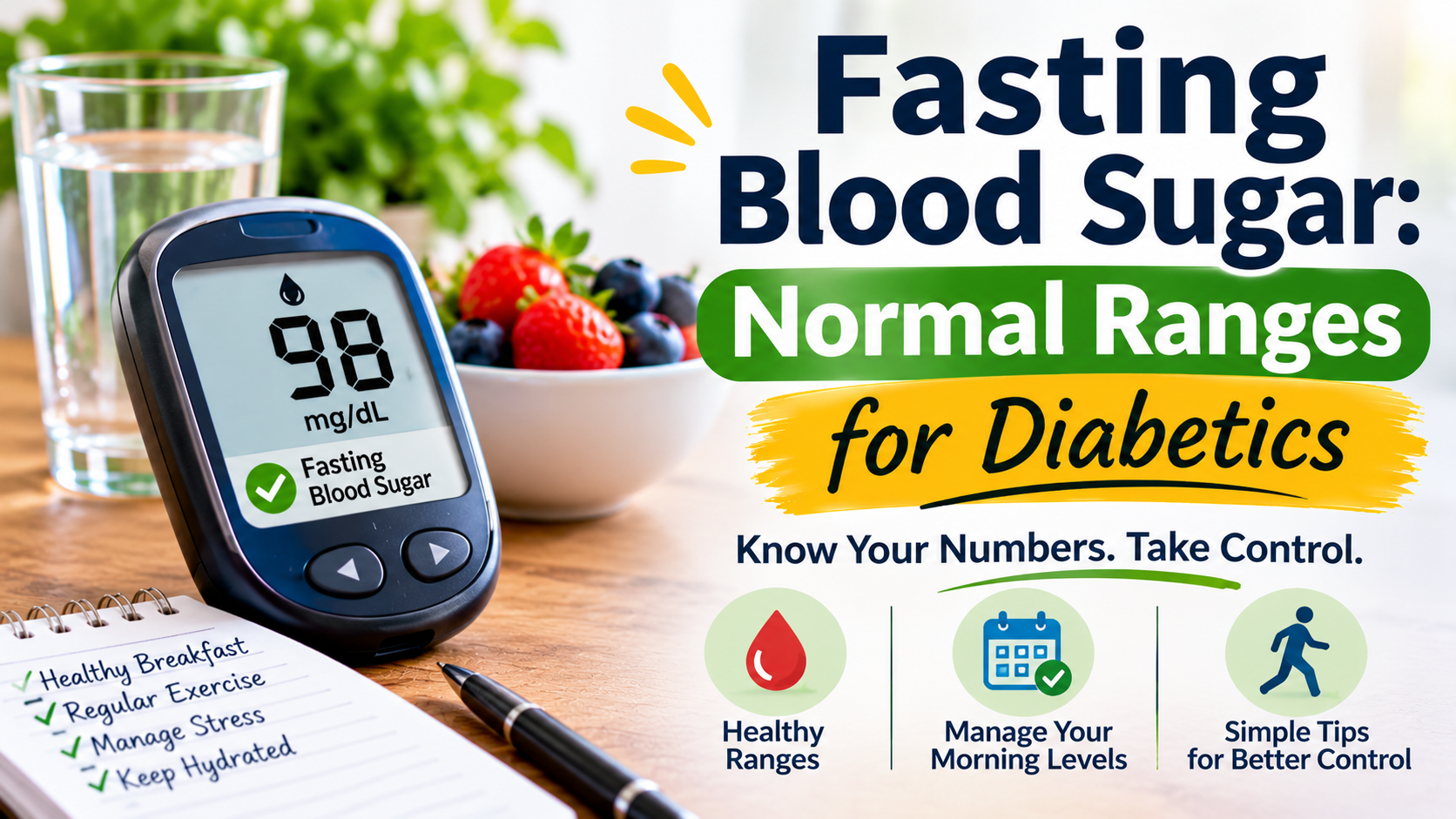
Fasting blood sugar is the amount of glucose in your blood after not eating for at least 8 hours. For people with diabetes, a healthy fasting blood sugar range is usually between 80-130 mg/dL (4.4-7.2 mmol/L), but your care team may set a different target for you.
What Is Fasting Blood Sugar?
Fasting blood sugar (sometimes called fasting plasma glucose) is the level of sugar in your blood after you haven’t eaten or drunk anything (except water) for 8 hours. This test is often done first thing in the morning, before you eat breakfast. It’s a key way to see how your body manages blood sugar overnight and can help your care team understand your diabetes management.
For people with diabetes, checking fasting blood sugar can show if your current plan is working or if changes are needed. It’s also a common test used to diagnose diabetes or prediabetes.
Fasting Blood Sugar Ranges for Diabetics
Your ideal fasting blood sugar range may depend on your age, health, and what your doctor or nurse (care team) recommends. However, most diabetes guidelines suggest these targets for adults with diabetes:
| Fasting Blood Sugar | mg/dL | mmol/L |
|---|---|---|
| Normal (no diabetes) | 70-99 | 3.9-5.5 |
| Prediabetes | 100-125 | 5.6-6.9 |
| Diabetes (target for most adults) | 80-130 | 4.4-7.2 |
Some people with diabetes may have higher or lower targets, especially if they are older or have other health conditions. Always follow the advice of your care team when it comes to your personal targets (American Diabetes Association).
Why Is Fasting Blood Sugar Important?
Fasting blood sugar shows how well your body controls blood sugar without the influence of recent meals. High fasting blood sugar can mean your body isn’t making or using insulin well overnight. If your morning readings are often above your target, it could be a sign you need to adjust your food, activity, or medication (talk to your care team before making changes).
Keeping fasting blood sugar in your target range can lower the risk of diabetes complications, like heart disease, kidney problems, and nerve damage (NIDDK).
How to Test Your Fasting Blood Sugar
To check your fasting blood sugar at home, use a blood glucose meter or a continuous glucose monitor (CGM), if you have one. Here’s how to do a finger-prick test:
- Wash your hands with warm water and dry them.
- Insert a test strip into your meter.
- Prick the side of your fingertip with a lancet.
- Squeeze out a drop of blood and touch it to the strip.
- Wait for the result (usually a few seconds).
Record your result and the date/time. Most people check fasting blood sugar first thing in the morning, before eating or drinking anything except water. If you’re unsure how or when to test, ask your care team for advice (CDC).
Tips to Manage Morning (Fasting) Blood Sugar
Many people with type 2 diabetes notice their fasting blood sugar is higher than they’d like, even if their readings are good during the day. Here are some practical ways to help manage your morning numbers:
- Eat a balanced dinner: Include fiber-rich vegetables and lean protein. Limit large portions of starchy foods and added sugars, which can raise blood sugar overnight. For dinner ideas, see Diabetic Dinner Ideas: Easy Meals for Balanced Blood Sugar.
- Avoid late-night snacking: Eating carbs right before bed can lead to higher fasting readings. If you need a snack, choose something small with protein and little or no carbs.
- Be active during the day: Even a short walk after dinner can help your body use blood sugar better overnight.
- Stick to a regular sleep schedule: Poor sleep can raise fasting blood sugar, so aim for 7-9 hours of quality rest each night.
- Take medications as prescribed: If you take diabetes medicine, make sure you follow your care team’s instructions. Never change your dose without talking to them.
Sometimes, the “dawn phenomenon” can cause high fasting blood sugar. This is when your body releases hormones in the early morning that raise blood sugar to help you wake up. If you notice this pattern, talk to your care team for specific advice.
What If My Fasting Blood Sugar Is Always High?
If your fasting blood sugar is often above your target range, don’t panic. Many people with type 2 diabetes struggle with morning highs. Try tracking your readings for a week and look for patterns. Bring this log to your next appointment, so your care team can help you find solutions.
It may help to review your evening meals, activity, and medication timing. Sometimes, small changes—like eating dinner earlier or choosing lower-carb options—can make a big difference. For more tips, see How to Lower Blood Sugar Quickly, Naturally: Safe, Everyday Tips.
Frequently asked questions
What is the normal fasting blood sugar range?
For most adults without diabetes, a normal fasting blood sugar is between 70-99 mg/dL (3.9-5.5 mmol/L). For people with diabetes, the target is usually 80-130 mg/dL (4.4-7.2 mmol/L), but your care team may set a different goal for you (American Diabetes Association).
How many hours is considered fasting for a blood sugar test?
Fasting means you have not eaten or drunk anything (except water) for at least 8 hours before your blood sugar test. Most people do this overnight and test first thing in the morning.
Can fasting increase blood sugar?
It might seem odd, but yes—sometimes fasting can cause higher blood sugar in the morning. This is often due to the “dawn phenomenon,” when your body releases hormones that raise blood sugar to get you ready for the day. If this happens often, talk to your care team about ways to manage it.
What fasting blood sugar level means prediabetes?
If your fasting blood sugar is between 100-125 mg/dL (5.6-6.9 mmol/L), it is considered prediabetes. This means your blood sugar is higher than normal, but not high enough for a diabetes diagnosis (NHS).
How often should I check my fasting blood sugar?
This depends on your treatment plan. Some people with type 2 diabetes check their fasting blood sugar daily, while others do it a few times per week. Your care team can tell you what’s best for your situation.
What should I do if my fasting blood sugar is too high?
If your fasting blood sugar is above your target, review your evening routine and talk to your care team. They may suggest changes to your food, activity, or medication. Don’t make changes on your own without professional advice.
Sources
- American Diabetes Association: Food and Nutrition
- NHS: Food and Keeping Active with Type 2 Diabetes
- CDC: Healthy Eating with Diabetes
- NIDDK: Healthy Living with Diabetes
Make it easier with GlucoForager
GlucoForager turns the food you already have into diabetes-friendly recipes, with carbs per serving, smart swaps and a glucose log that shows how meals affect you. Try it free or browse our free diabetes-friendly recipes.
This article is general information, not medical advice. Everyone's diabetes is different, so talk to your doctor, diabetes nurse or dietitian before making big changes to your diet or treatment.