
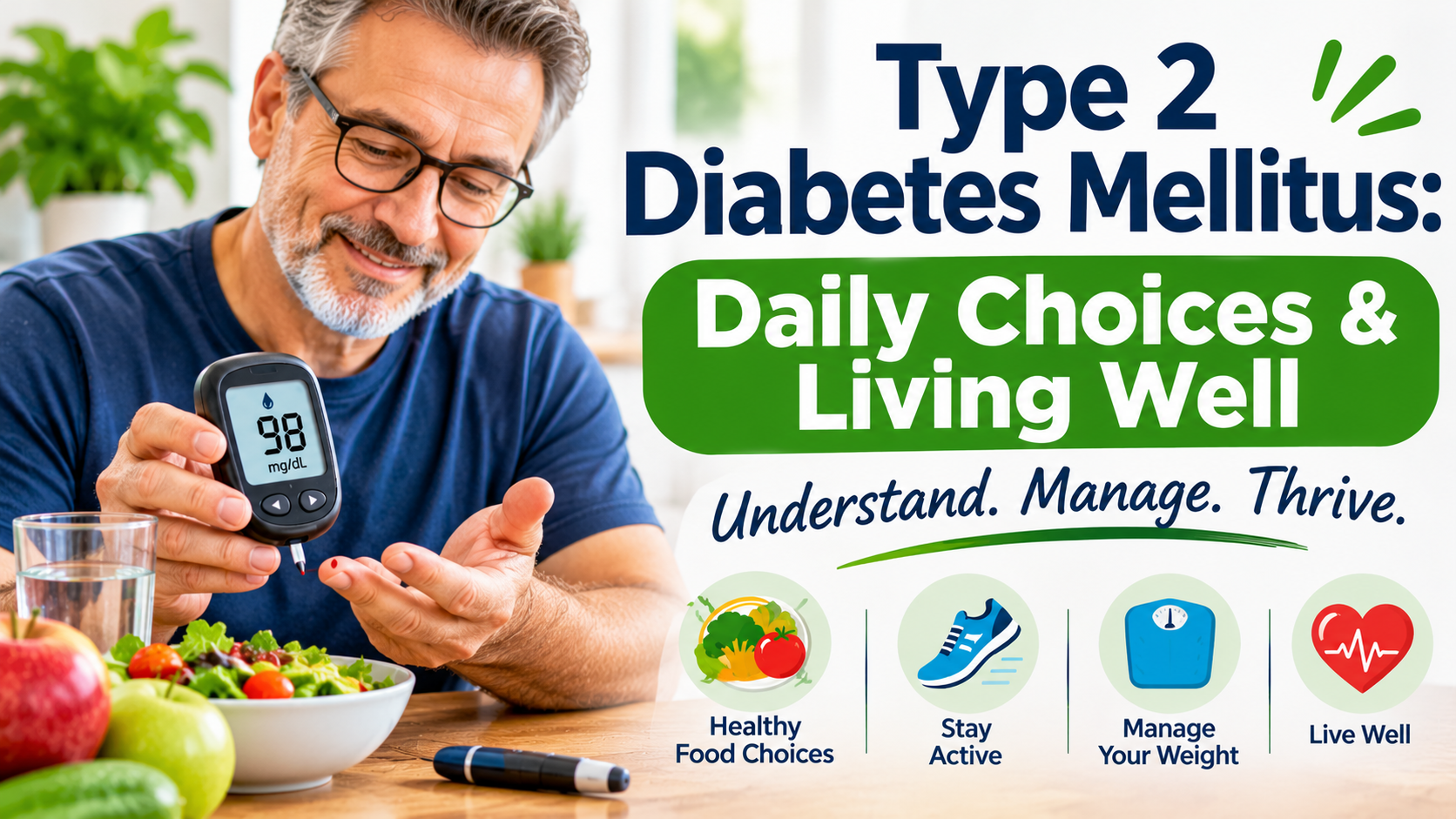
Type 2 diabetes mellitus is a common condition where your body cannot use insulin properly, causing high blood sugar. It affects daily choices around food, activity, and lifestyle. Learning how to manage it can help you feel better and lower your risk of complications.
What Is Type 2 Diabetes Mellitus?
Type 2 diabetes mellitus (also called T2DM or type II diabetes mellitus) is a long-term condition that affects how your body handles blood sugar (glucose). With type 2 diabetes, your body either does not make enough insulin or does not use insulin well. Insulin is a hormone that helps move sugar from your blood into your cells for energy.
When insulin does not work well, sugar builds up in your blood. Over time, high blood sugar (over 126 mg/dL or 7.0 mmol/L fasting) can damage your heart, eyes, kidneys, and nerves. According to the CDC, type 2 diabetes is the most common type of diabetes mellitus.
How Is Type 2 Diabetes Mellitus Different from Type 1?
There are two main types of diabetes mellitus: type 1 and type 2. They have similar names but are quite different.
- Type 1 diabetes mellitus usually starts in childhood or young adulthood. The pancreas stops making insulin, so people with type 1 need to take insulin every day.
- Type 2 diabetes mellitus usually develops in adults, but can affect younger people too. The body still makes some insulin, but it does not work as well (insulin resistance). Many people manage type 2 with healthy eating, activity, and sometimes medication.
Both types are called "diabetes mellitus," but the causes and treatments are different. You can read more about the differences at Diabetes UK.
How Type 2 Diabetes Mellitus Affects Your Daily Choices
Living with type 2 diabetes means making daily decisions to help keep your blood sugar in a healthy range (generally 80–130 mg/dL or 4.4–7.2 mmol/L before meals). Here are some of the biggest areas it can affect:
Food and Carbohydrates
Carbohydrates (carbs) in food raise blood sugar the most. This means you’ll want to pay attention to your carb intake, especially with starchy foods, sugary drinks, and desserts. Here’s a simple table of common foods and their carb content:
| Food | Serving Size | Carbs (g) |
|---|---|---|
| White bread | 1 slice | 13g |
| Brown rice | 1 cup (cooked) | 45g |
| Apple | 1 medium | 25g |
| Potato (boiled) | 1 medium | 37g |
| Broccoli | 1 cup (cooked) | 6g |
| Chicken breast | 3 oz (85g) | 0g |
Choosing whole grains, non-starchy vegetables, lean protein, and limiting sugary foods can help steady your blood sugar. For more ideas, see Diabetic Diet: What to Eat for Better Blood Sugar Control.
Physical Activity
Regular movement helps your body use insulin better and lowers blood sugar. You don’t have to run marathons—brisk walking, gardening, or dancing all count. Try to aim for at least 150 minutes a week of moderate activity, as recommended by the NHS.
Weight and Stress
Even a small amount of weight loss (5–10% of your body weight) can help your body use insulin more effectively. Stress can also raise blood sugar, so finding ways to relax—like deep breathing or gentle exercise—can make a difference.
Managing Type 2 Diabetes Mellitus at Mealtimes
Eating with type 2 diabetes doesn’t mean giving up all your favorite foods. It’s about balance and smart swaps. Here are some practical tips:
- Watch your portions: Use smaller plates, measure out servings, and fill half your plate with non-starchy vegetables.
- Choose fiber-rich foods: Whole grains, beans, and veggies help slow the rise in blood sugar after meals.
- Limit sugary drinks: Water, unsweetened tea, or coffee are better choices than soda or juice.
- Pair carbs with protein or healthy fats: This helps prevent blood sugar spikes. For example, have an apple (25g carbs) with peanut butter (0g carbs).
Meal planning can make things easier. The CDC offers a helpful guide to get you started.
Blood Sugar: What’s Normal and What to Aim For
If you have type 2 diabetes mellitus, your care team will talk with you about your target blood sugar range. Here are typical goals for many adults:
| When | Target (mg/dL) | Target (mmol/L) |
|---|---|---|
| Before meals | 80–130 | 4.4–7.2 |
| 2 hours after meals | Less than 180 | Less than 10.0 |
Your targets may be different, so always follow your care team’s advice. Checking your blood sugar helps you see how food, activity, and stress affect your numbers.
Learn more about blood sugar ranges in Normal Blood Sugar: What’s Healthy for Diabetics?.
Everyday Tips for Living Well with Type 2 Diabetes Mellitus
- Eat regularly: Skipping meals can make blood sugar harder to control.
- Read food labels: Check total carbs per serving, not just sugar.
- Stay hydrated: Drink water throughout the day.
- Get enough sleep: Poor sleep can make blood sugar harder to manage.
- Stay connected: Support from friends, family, or a diabetes group can help you stay on track.
Frequently Asked Questions
What is the ICD-10 code for type 2 diabetes mellitus?
The ICD-10 code for type 2 diabetes mellitus is E11. This code is used in medical records and insurance billing to identify the diagnosis. If your diabetes has complications, extra numbers are added to the code.
What does "type 2 diabetes mellitus with hyperglycemia" mean?
This means you have type 2 diabetes and your blood sugar is higher than normal (hyperglycemia). Your care team may use this phrase if your blood sugar readings are often above your target range (over 180 mg/dL or 10.0 mmol/L after meals).
What is "type 2 diabetes mellitus without complications"?
This means you have type 2 diabetes but do not have any related health problems, like kidney, eye, or nerve issues. Your care team will check for complications at regular visits.
What is the pathophysiology of type 2 diabetes mellitus?
Pathophysiology refers to how the disease develops in the body. In type 2 diabetes mellitus, your cells become resistant to insulin, and the pancreas cannot keep up with the extra demand for insulin. This leads to high blood sugar over time.
Is "mellitus" the same as "diabetes"?
"Diabetes mellitus" is the full medical name. "Mellitus" means "sweet" in Latin, referring to sugar in the urine. People often just say "diabetes," but technically, there are other types of diabetes (like diabetes insipidus) that are not related to blood sugar.
Is there a difference between "type 2 diabetes mellitus" and "type 2 diabetes"?
No, these terms mean the same thing. "Type 2 diabetes mellitus" is the full medical term, while "type 2 diabetes" is the shorter, everyday way to say it.
Sources
- CDC: Healthy Eating with Diabetes
- NHS: Food and Keeping Active with Type 2 Diabetes
- Diabetes UK: Eating with Diabetes
Make it easier with GlucoForager
GlucoForager turns the food you already have into diabetes-friendly recipes, with carbs per serving, smart swaps and a glucose log that shows how meals affect you. Try it free or browse our free diabetes-friendly recipes.
This article is general information, not medical advice. Everyone's diabetes is different, so talk to your doctor, diabetes nurse or dietitian before making big changes to your diet or treatment.