
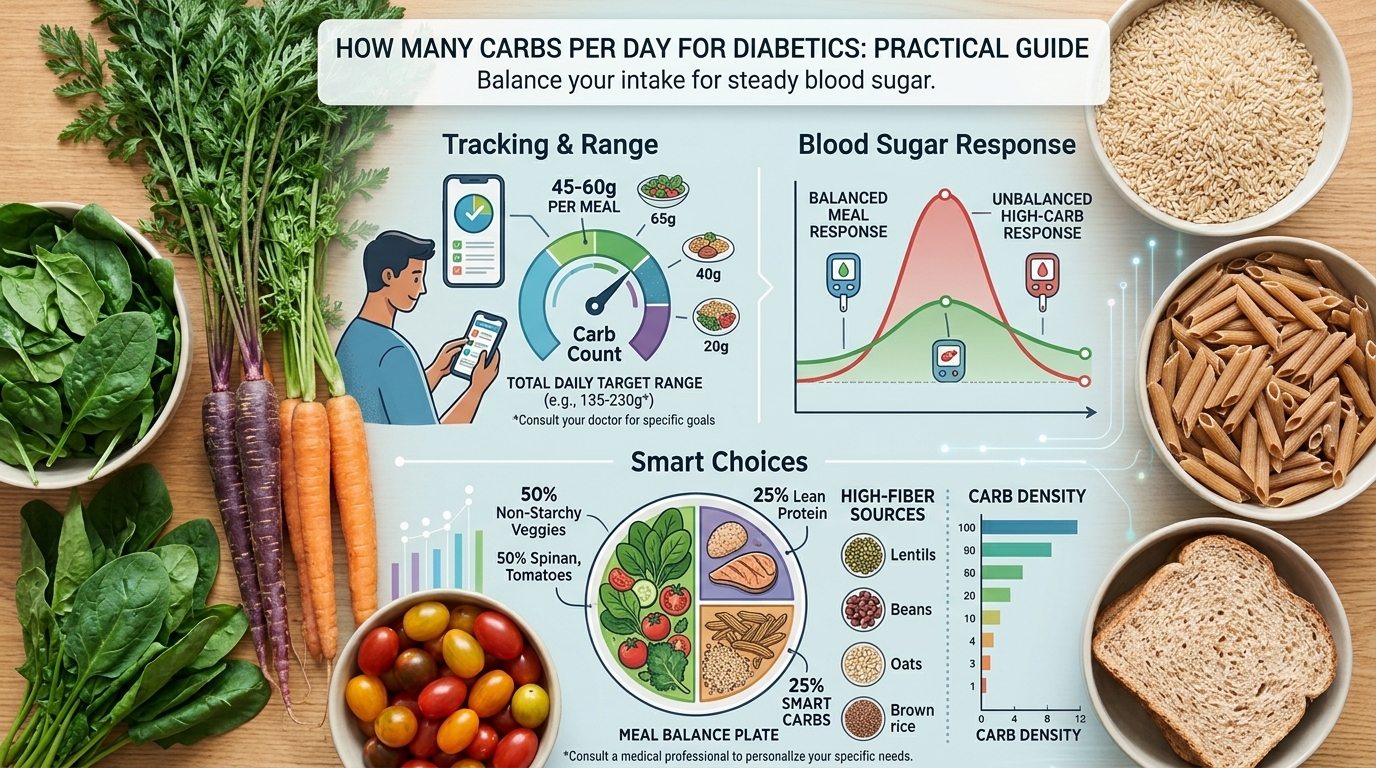
Most adults with diabetes do best with 130–200 grams of carbs per day, spread across meals and snacks. The right amount for you depends on your age, activity, weight goals, and your care team's advice. Counting carbs and balancing them with protein, fiber, and healthy fats helps keep blood sugar steady.
How Many Carbs Per Day for Diabetics?
There’s no single “magic number” for carbs for everyone with diabetes. Most experts, including the American Diabetes Association and Diabetes UK, recommend aiming for about 45–60 grams of carbohydrate per meal for adults. That adds up to about 130–200 grams per day if you eat three meals and a snack or two.
Some people may need less (around 30–45 grams per meal) if they are trying to lose weight, are smaller, or are less active. Others may need a bit more. Always talk to your care team before making big changes to your carb intake.
Why Carbs Matter for Diabetes
Carbohydrates (carbs) are the main nutrient that affects your blood sugar (blood glucose). When you eat carbs, your body breaks them down into glucose, which enters your blood. If you have diabetes or prediabetes, your body may not manage this glucose as well as it should.
Eating too many carbs at once can spike your blood sugar. Eating too few can leave you low on energy, and may even cause low blood sugar (hypoglycemia) if you take certain medications. Finding your personal balance is key.
How to Count Carbs: The Basics
Counting carbs means reading food labels, measuring portions, and adding up the grams of carbohydrate you eat. Here’s a simple way to start:
- Read food labels: Look for “Total Carbohydrate” per serving.
- Use measuring cups or a food scale to check your portion size.
- Use carb counting books or apps for foods without labels, like fruit or rice.
Here’s a quick table of common foods and their typical carb counts:
| Food | Portion | Carbs (grams) |
|---|---|---|
| Bread (whole wheat) | 1 slice | 12–15 |
| Cooked rice | 1/3 cup (about 50g) | 15 |
| Apple | 1 medium | 20–25 |
| Milk (skim or semi-skimmed) | 1 cup (240ml) | 12 |
| Cooked pasta | 1/2 cup (about 70g) | 20 |
| Potato (boiled) | 1 small (100g) | 15–17 |
| Banana | 1 small | 20–23 |
| Carrots (raw) | 1 cup (120g) | 10 |
| Yogurt (plain, low-fat) | 6 oz (170g) | 10–15 |
For more on reading labels, see How to Read Food Labels for Carbs (A Simple Guide).
How to Balance Carbs in Real Meals
It’s not just about the total grams of carbs—it’s also how you spread them out and what you eat with them. Here are some tips:
- Spread carbs evenly through the day to avoid big blood sugar swings.
- Pair carbs with protein and fiber (like chicken, beans, or veggies). This helps slow down how fast carbs raise your blood sugar.
- Choose high-fiber carbs like whole grains, beans, lentils, and non-starchy vegetables. They are digested more slowly.
- Limit sugary drinks and sweets—these spike blood sugar quickly.
- Watch your portions of starchy foods (like bread, rice, potatoes).
For meal ideas, try The Ultimate Free 7-Day Diet Plan for Diabetic Patients and Diabetic Diet: What to Eat for Better Blood Sugar Control.
Carb Needs for Type 2 Diabetes and Prediabetes
If you have type 2 diabetes or prediabetes, the same general carb ranges apply: 130–200 grams per day works well for most people. Some may go lower (as low as 100 grams per day) if their care team suggests it, especially for weight loss or better blood sugar control (CDC).
With prediabetes, spreading carbs out and choosing higher-fiber options can help prevent blood sugar spikes and may even delay or prevent type 2 diabetes. It’s a good idea to keep snacks small (about 15 grams of carbs) and focus on balanced meals.
Carbs and Weight Loss: What to Know
Cutting back on carbs can help some people with diabetes or prediabetes lose weight, which often improves blood sugar. But you don’t have to go super low-carb or keto to see benefits. Many people do well with 100–150 grams per day, focusing on high-fiber carbs and smaller portions of starchy foods (NHS).
If you’re considering a very low-carb diet (like keto, under 50 grams per day), talk to your care team first. These diets aren’t right for everyone and may affect your medication needs.
How to Adjust Your Carb Intake
Your ideal carb amount depends on your age, weight, activity, and health goals. Here’s how to find your balance:
- Track your carbs and blood sugar for a week. Notice how different amounts affect your readings (before and 1–2 hours after meals).
- Start with 45–60 grams per meal and adjust up or down as needed.
- Work with your care team to set a target that fits your lifestyle and medications.
Remember, your needs may change over time. Stay flexible and check in with your care team if you notice big changes in your blood sugar.
Frequently asked questions
How many carbs per day to lose weight with diabetes?
Most people with diabetes who want to lose weight do well with 100–150 grams of carbs per day, spread across meals and snacks. Focus on high-fiber, low-calorie carbs like vegetables, and reduce portions of bread, rice, and pasta. Always check with your care team before making big changes.
What is the recommended carbs per day for type 2 diabetes?
The recommended range is usually 130–200 grams per day, or about 45–60 grams per meal. Some people do well with slightly less, especially if aiming for weight loss or better blood sugar control. Your care team can help you find your best range (CDC).
How many carbs per day for prediabetes?
People with prediabetes benefit from the same approach: 130–200 grams per day, spread evenly across meals. Choosing whole grains, beans, and plenty of vegetables helps keep blood sugar steady and may reduce your risk of developing type 2 diabetes (Diabetes UK).
How many carbs per day on keto?
Keto diets typically limit carbs to 20–50 grams per day. This is much lower than most diabetes experts recommend, and may not be safe or needed for everyone. If you’re interested in keto, talk to your care team for guidance.
How do I know if I’m eating the right amount of carbs?
Check your blood sugar before and after meals. If your readings are mostly in your target range (usually 80–130 mg/dL or 4.4–7.2 mmol/L before meals, and under 180 mg/dL or 10 mmol/L two hours after), your carb intake is likely working for you. If not, adjust with your care team’s help.
Can I eat bread, pasta, and rice if I have diabetes?
Yes, you can eat these foods in moderate portions. Choose whole grain versions when possible, watch your serving size, and pair them with protein and fiber. For more tips, see Can diabetics eat pasta, bread, and rice? The honest answer.
Sources
- American Diabetes Association: Food & Nutrition
- Diabetes UK: Eating Well with Diabetes
- CDC: Healthy Eating with Diabetes
- NHS: Type 2 Diabetes – Food and Keeping Active
Make it easier with GlucoForager
GlucoForager turns the food you already have into diabetes-friendly recipes, with carbs per serving, smart swaps and a glucose log that shows how meals affect you. Try it free or browse our free diabetes-friendly recipes.
This article is general information, not medical advice. Everyone's diabetes is different, so talk to your doctor, diabetes nurse or dietitian before making big changes to your diet or treatment.