
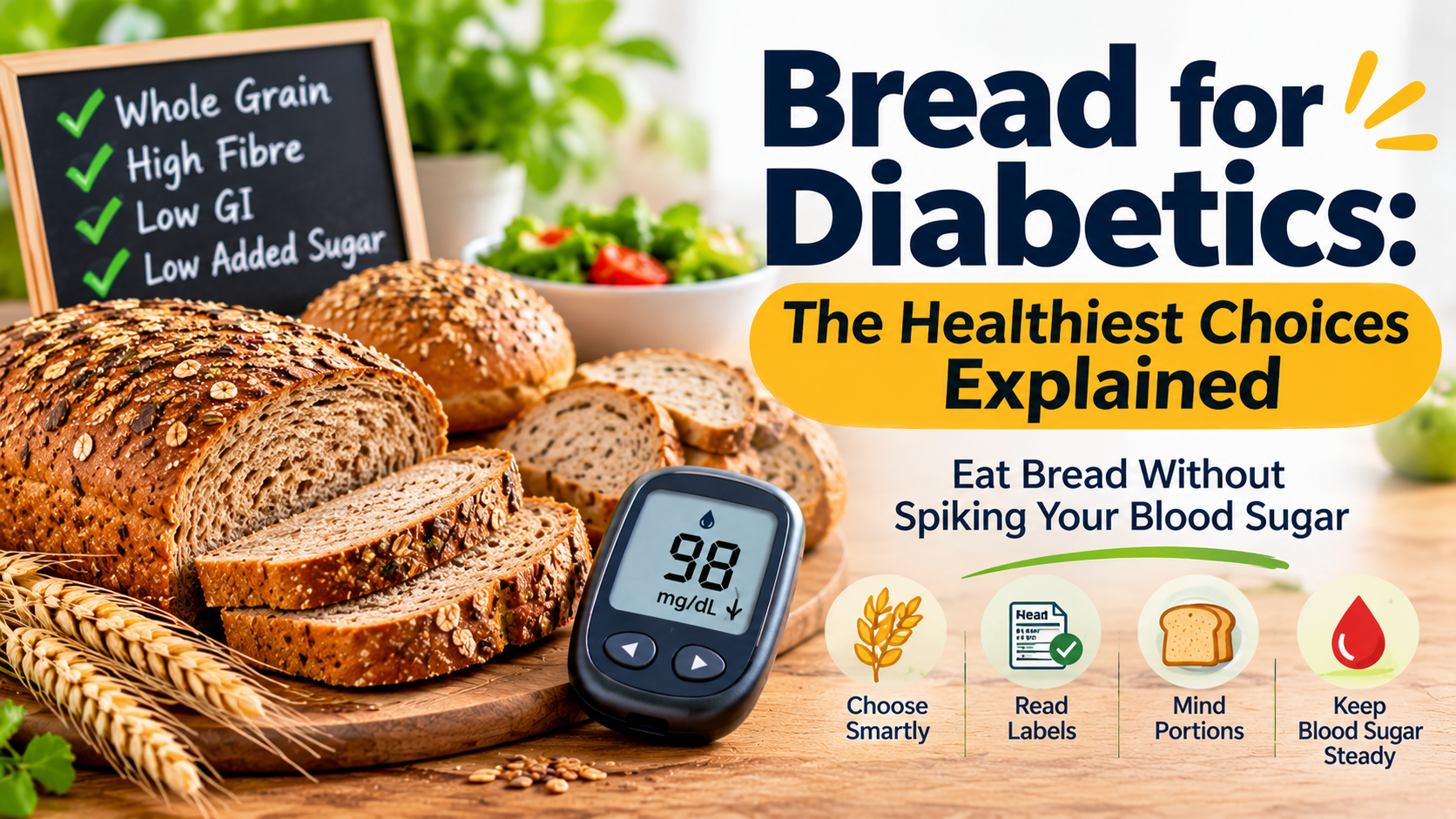
Bread for diabetics isn’t off limits, but choosing the right type is important. The best bread for diabetics is high in fiber, lower in carbs, and made with whole grains to help keep blood sugar steady. Read on to learn what to look for on labels, the healthiest breads to eat, and how to enjoy bread without unwanted spikes.
Can Diabetics Eat Bread?
Yes, people with diabetes (both type 1 and type 2) can eat bread. The key is choosing the right kind and eating the right portion size. Not all breads are equal—some can raise blood sugar (glucose) quickly, while others have a gentler effect. Understanding the differences can help you include bread in a balanced, diabetes-friendly diet.
Is Bread Bad for Diabetics?
Many people wonder if bread is bad for diabetics. Bread is not "bad," but some types can cause blood sugar to rise quickly. Breads made with white flour or lots of added sugar are digested fast, which can lead to spikes in blood sugar (over 180 mg/dL or 10 mmol/L after meals for some people). Whole grain, high-fiber breads are digested more slowly, leading to steadier blood sugar levels (American Diabetes Association).
What to Look for on Bread Labels
When shopping for bread for diabetics, the nutrition label and ingredients list are your best friends. Here’s what to look for:
- Whole grain or whole wheat as the first ingredient: This means the bread is made with the entire grain, which provides more fiber and nutrients.
- Fiber: Aim for at least 3 grams of fiber per slice. Fiber helps slow down how fast bread raises your blood sugar.
- Total carbohydrates: Most slices of bread have 12-20 grams of carbs. Choose lower-carb options if you are watching your intake.
- Added sugars: Look for breads with 2 grams or less of added sugar per slice.
- Serving size: Some brands list nutrition for one slice, others for two. Double-check before you eat.
Words like "multigrain," "7-grain," or "wheat" don’t always mean whole grain—check the ingredients to be sure.
The Best Bread for Diabetics: Healthiest Choices
Here’s a quick table comparing common types of bread and their average carbs and fiber (per 1 slice):
| Bread Type | Carbs (g) | Fiber (g) | Blood Sugar Impact |
|---|---|---|---|
| White bread | 14-18 | 0.5-1 | High |
| Whole wheat bread | 12-16 | 2-3 | Medium |
| 100% whole grain bread | 12-15 | 3-5 | Lower |
| Sourdough bread | 15-20 | 1-2 | Medium |
| Sprouted grain bread (e.g. Ezekiel) | 12-15 | 3-5 | Lower |
| Low-carb bread | 5-10 | 5-8 | Lowest |
| Rye bread | 12-15 | 2-3 | Medium |
Best bread for diabetics: 100% whole grain, sprouted grain, or low-carb breads with at least 3 grams of fiber per slice. These choices are less likely to cause blood sugar spikes.
Tip: In the UK, look for "wholemeal" bread. In the US, look for "100% whole wheat" or "whole grain." Sprouted breads (like Ezekiel) are also a good choice.
How Much Bread Can Diabetics Eat?
Portion size matters. For most people with diabetes, 1-2 slices per meal (about 15-30 grams of carbs) can fit into a balanced meal plan. But everyone is different, and your personal carb goal may be higher or lower (CDC). Test your blood sugar before and 1-2 hours after eating bread to see how your body responds. If you use insulin, talk to your care team about how to match your dose to your carbs.
Tips for Enjoying Bread Without Blood Sugar Spikes
- Pair bread with protein and healthy fat: Add nut butter, eggs, cheese, avocado, or lean meats. This slows digestion and helps prevent spikes.
- Choose high-fiber toppings: Veggies like cucumber, tomato, or leafy greens add fiber and keep you full.
- Try open-faced sandwiches: Use one slice of bread instead of two for fewer carbs.
- Toast your bread: Toasting can slow down how quickly your body digests the carbs.
- Experiment and monitor: Everyone’s blood sugar responds differently. Check your levels to learn what works for you.
For delicious, diabetes-friendly bread ideas, try these recipes:
- Mediterranean Avocado Toast (25g carbs)
- English Breakfast Bean Toast (30g carbs)
- Za'atar Avocado Toast (28g carbs)
What About Sourdough and Rye Bread?
Sourdough and rye breads are often easier on blood sugar than white bread, but not all are created equal. Traditional sourdough (made with a starter, not commercial yeast) can have a lower glycemic index, meaning it raises blood sugar more slowly. Rye bread made with whole grain rye is better than light rye or rye blends. Always check the label for the first ingredient and fiber content.
Homemade Bread for Diabetics
Baking your own bread lets you control the ingredients. Use whole grain flours, seeds, and extra fiber (like ground flaxseed or chia seeds). Many online recipes are labeled as "diabetic bread"—just double check the carb and fiber content. If you’re interested in a homemade bread for diabetics recipe, look for ones with at least 3g fiber and less than 15g carbs per slice.
Related: More on Bread, Carbs, and Blood Sugar
- Can diabetics eat pasta, bread, and rice? The honest answer
- How Many Carbs Per Day for Diabetics? A Simple Guide
Frequently asked questions
What is the best bread for diabetics?
The best bread for diabetics is 100% whole grain or sprouted grain bread with at least 3 grams of fiber per slice. Low-carb breads can also be a good option if they are high in fiber and low in added sugar. Always check the label for whole grains as the first ingredient.
Is bread high in carbs?
Yes, bread is a source of carbohydrates. Most regular slices have 12-20 grams of carbs. Choosing high-fiber, whole grain breads can help slow the impact on blood sugar, but portion size is important. If you are carb counting, always check the nutrition label.
What bread can diabetics eat?
People with diabetes can eat whole grain, sprouted grain, or low-carb breads that are high in fiber and low in added sugar. Rye and sourdough breads made with whole grains are also better choices. Try to avoid white bread or breads made with refined flour.
Is sourdough bread good for diabetics?
Sourdough bread made with traditional starters and whole grains can be a better choice than white bread. It’s digested more slowly, which may help prevent spikes. Always check the label for fiber and whole grain content, as some sourdoughs are made with white flour.
What is the best bread for diabetics type 2?
For type 2 diabetes, the best bread is high in fiber and low in added sugar—such as 100% whole grain, sprouted grain, or low-carb breads. These help keep blood sugar steadier and support overall health (NHS).
Can people with type 1 diabetes eat bread?
Yes, people with type 1 diabetes can eat bread. It’s important to count the carbs and match insulin to the meal, if needed. Whole grain and high-fiber breads are better choices. Talk to your care team about the best way to fit bread into your plan.
Where can I find bread for diabetics in the UK?
In the UK, look for "wholemeal" or "whole grain" breads in supermarkets. Some brands also offer "high-fiber" or "lower-carb" options. Always check the nutrition label for fiber and total carbs (Diabetes UK).
Sources
- American Diabetes Association: Food and Nutrition
- NHS: Food and Keeping Active with Type 2 Diabetes
- CDC: Healthy Eating with Diabetes
- Diabetes UK: Eating with Diabetes
Make it easier with GlucoForager
GlucoForager turns the food you already have into diabetes-friendly recipes, with carbs per serving, smart swaps and a glucose log that shows how meals affect you. Try it free or browse our free diabetes-friendly recipes.
This article is general information, not medical advice. Everyone's diabetes is different, so talk to your doctor, diabetes nurse or dietitian before making big changes to your diet or treatment.